Deja un mensaje
Si está interesado en nuestros productos y desea obtener más información, deje un mensaje aquí, le responderemos lo antes posible.

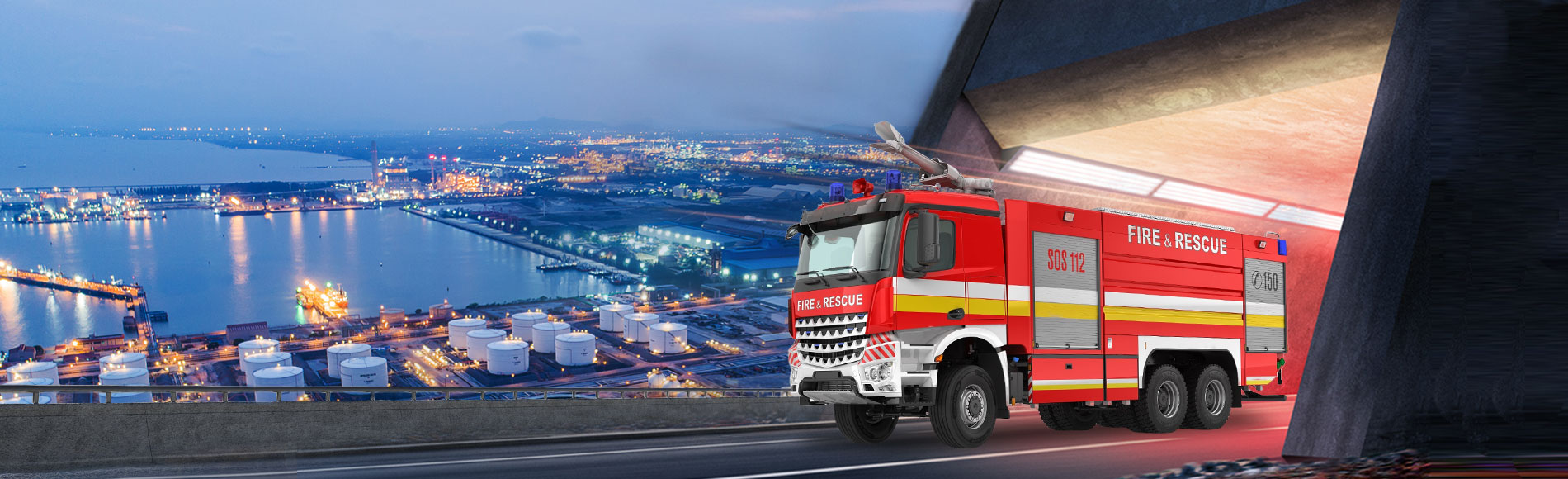
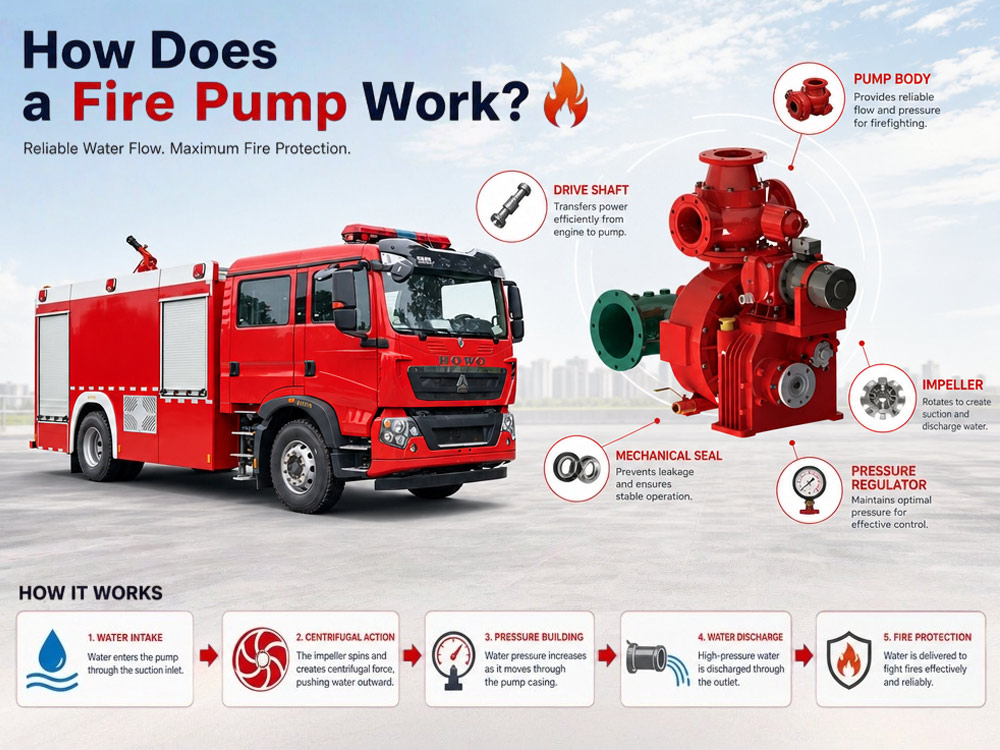
¿Cómo funciona una bomba contra incendios? Explicación del principio de funcionamiento de la bomba de un camión de bomberos
Una bomba contra incendios es el corazón del sistema de suministro de agua de todo camión de bomberos. Ya sea que responda a un incendio estructural, una emergencia industrial, un incidente aeroportuario o una operación forestal, la bomba contra incendiosen un camión de bomberos es responsable de suministrar agua a alta presión a las mangueras, monitores contra incendios y sistemas de espuma.Su diseño de impulsor centrífugo y su sistema accionado por toma de fuerza garantizan una presión estable y altos caudales, aumentando directamente la eficacia de la extinción de incendios en más del 40 %, mientras reducen el tiempo de respuesta 3 veces. Puede considerarse el guardián invisible de las operaciones de extinción de incendios y la piedra angular técnica de la respuesta moderna ante emergencias.
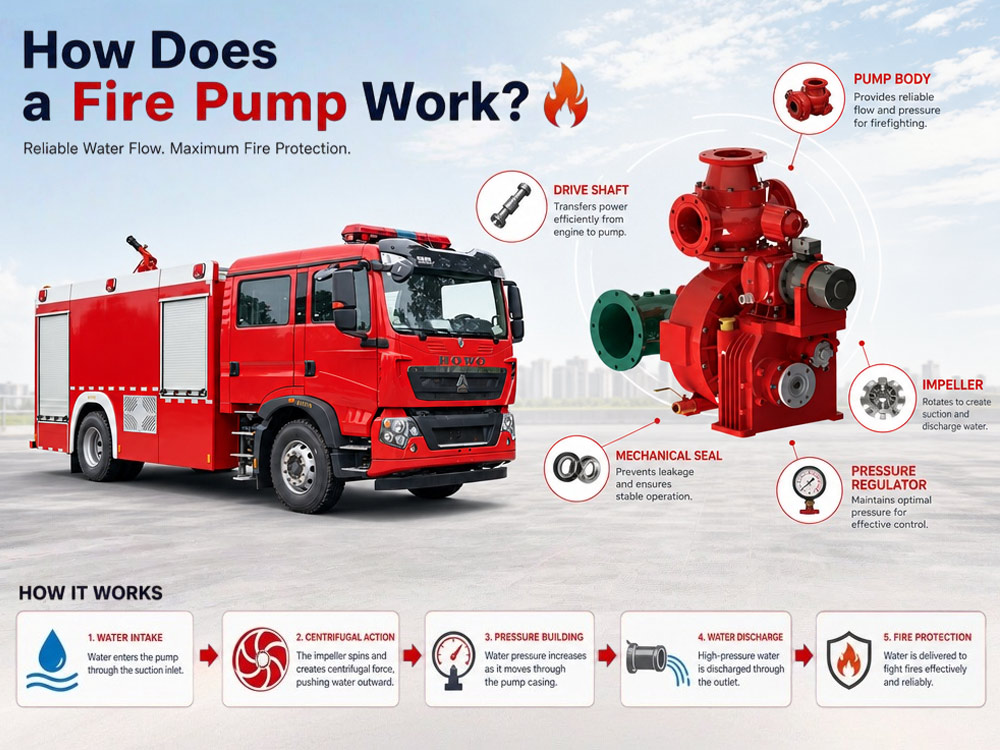
Aprenda cómo funciona una bomba contra incendios, incluyendo su principio de funcionamiento, componentes principales, proceso de flujo de agua, generación de presión y aplicaciones. Descubra cómo las bombas de los camiones de bomberos proporcionan un suministro de agua fiable para la extinción de incendios y cómo elegir la bomba adecuada para su vehículo contra incendios.Aprendamos sobre ello hoy.
1. Impulsor: El componente giratorio que aspira agua y la expulsa hacia afuera mediante fuerza centrífuga. Normalmente está fabricado de bronce, acero inoxidable o hierro fundido.
2. Carcasa de la bomba: La cubierta que contiene el impulsor y dirige el flujo de agua. Está diseñada para convertir la velocidad en presión.
3. Toma de fuerza (PTO): La conexión mecánica que transfiere la potencia del motor desde la transmisión del camión hasta la bomba contra incendios.
1. La potencia se transfiere desde el motor a través de la toma de fuerza (PTO)
El motor del camión acciona la toma de fuerza (PTO), que se conecta al eje de la bomba. Cuando el operador activa la toma de fuerza, la potencia del motor se redirige para hacer girar el impulsor de la bomba a alta velocidad.
2. El impulsor comienza a girar
El impulsor gira a 1.500–2.500 RPM, aspirando agua hacia la bomba a través de la entrada de succión. Las palas giratorias del impulsor crean una zona de baja presión en el centro, atrayendo agua desde el tanque integrado, el hidrante o una fuente natural de agua.
3. La fuerza centrífuga aumenta la presión del agua
A medida que el impulsor gira, expulsa el agua hacia afuera mediante fuerza centrífuga. La velocidad del agua aumenta mientras se desplaza desde el centro hasta el borde exterior del impulsor. La carcasa de la bomba convierte entonces esta velocidad en presión, impulsando el agua a alta presión hacia la salida de descarga.
4. El agua a alta presión sale por la salida de descarga
El agua presurizada (normalmente 0,8–1,2 MPa) sale por la salida de descarga y se suministra a las mangueras contra incendios, monitores contra incendios o sistemas de dosificación de espuma para las operaciones de extinción de incendios.
La bomba contra incendios puede extraer agua de tres fuentes:
Tanque de agua integrado: La fuente principal de agua para el ataque inicial. Capacidad habitual: 2.000–12.000 litros. Proporciona suministro de agua inmediato al llegar.
Hidrante contra incendios: Conectado mediante mangueras de suministro. Proporciona un suministro continuo de agua para operaciones prolongadas. La presión del hidrante ayuda a la bomba a mantener el caudal.
Fuente natural de agua (aspiración): Lagos, ríos, estanques o piscinas. La bomba utiliza un sistema de cebado para eliminar el aire de la manguera de succión antes de realizar la aspiración. Altura máxima teórica de elevación al nivel del mar: aproximadamente 10 metros (33 pies). Profundidad efectiva de aspiración: normalmente 7–8 metros.
Proceso de aspiración:
Conectar la manguera rígida de succión a la entrada de la bomba
Sumergir el colador al menos 2–3 pies por debajo de la superficie del agua
Activar el cebador para eliminar el aire de la manguera y la bomba
Se genera vacío y la presión atmosférica empuja el agua hacia arriba
El agua llena la bomba y luego la bomba centrífuga la presuriza
Entrada de succión: Lugar por donde entra el agua en la bomba. Tamaño habitual: DN100–DN150. Equipada con un colador para evitar que entren residuos.
Salida de descarga:Donde sale el agua presurizada. Tamaño típico: DN65–DN80 (salidas estándar). Equipada con válvulas para controlar el flujo hacia mangueras o monitores. Múltiples salidas permiten el uso simultáneo.
Impulsor:El componente giratorio que crea el flujo de agua. Convierte la energía mecánica en energía cinética. Normalmente fabricado en bronce (resistente a la corrosión), acero inoxidable (duradero y de larga vida útil) o hierro fundido (rentable para aplicaciones estándar).
Carcasa de la bomba:La estructura que dirige el flujo de agua. Diseñada para convertir la velocidad en presión. Diseños comunes: carcasa de voluta (forma espiral para un flujo suave) y carcasa con difusor (para mayor eficiencia).
Sistema de cebado:Elimina el aire de la bomba y de la manguera de succión antes de la aspiración. Los tipos incluyen:
Cebador de vacío:Diseño de paletas rotativas o pistón. Rápido y eficiente. El más común en los camiones de bomberos modernos.
Cebador de escape:Utiliza el escape del motor para crear vacío. Simple, pero menos eficaz.
Cebador eléctrico:Accionado por motor. Puede cebar sin rotación de la bomba. Protege el sello mecánico de daños por funcionamiento en seco.
Válvula de alivio de presión:Evita la sobrepresurización. Se abre cuando la presión supera el límite establecido. Protege las mangueras, la bomba y a los bomberos.
Gobernador de presión:Mantiene automáticamente la presión establecida. Ajusta las RPM del motor para compensar los cambios de flujo. Reduce la carga de trabajo del operador. Disponible en modo de presión (mantiene la presión preestablecida) y modo RPM (mantiene la velocidad del motor preestablecida).
PTO (toma de fuerza):La conexión entre el motor y la bomba. Transfiere la potencia del motor para accionar la bomba. Los camiones de bomberos normalmente utilizan una PTO tipo sándwich (montada entre el motor y la transmisión) para obtener la máxima salida de potencia.
| Tipo de bomba | Ventajas | Aplicaciones típicas |
|---|---|---|
| Bomba centrífuga de una etapa | Alto caudal, diseño simple, rentable | Camiones de bomberos municipales |
| Bomba contra incendios de dos etapas | Mayor presión, modos intercambiables | Extinción de incendios en edificios altos, tendidos largos de mangueras |
| Bomba contra incendios montada en posición central | Mejor equilibrio, funcionamiento estable | Vehículos contra incendios estándar |
| Bomba contra incendios montada en la parte trasera | Mantenimiento más sencillo, mejor refrigeración | Camiones para aeropuertos e industrias |
| Elemento de comparación | Bomba contra incendios | Bomba de agua estándar |
|---|---|---|
| Presión de trabajo | Alta (0,8–2,5 MPa) | Baja (0,2–0,6 MPa) |
| Caudal | Alto (1.200–6.000 L/min) | Moderado (500–2.000 L/min) |
| Operación continua | Sí (diseñada para uso prolongado) | Depende del modelo |
| Accionada por TDP | Sí | Usualmente no |
| Cumplimiento de normas contra incendios | Sí (certificada NFPA, EN, GB) | No |
| Áreas de aplicación | Extinción de incendios y rescate | Suministro de agua industrial, agrícola y doméstico |
| Aplicación | Bomba recomendada | Razón |
|---|---|---|
| Extinción de incendios municipal | De una etapa (1.200–3.000 L/min) | Rentable, suficiente para la mayoría de los incendios |
| Edificios de gran altura | De dos etapas (2.000–4.000 L/min) | Mayor presión para elevación vertical |
| Plantas petroquímicas | De dos etapas (3.000–6.000 L/min) | Alto caudal y presión para incendios industriales |
| Rescate en accidentes aeroportuarios | Montada en la parte trasera (4.000–6.000 L/min) | Alto caudal, mantenimiento más fácil |
| Extinción de incendios en áreas forestales | De una etapa (1.000–2.000 L/min) | Ligera, portátil |
La bomba contra incendios genera presión mediante fuerza centrífuga. Cuando el impulsor gira, atrae el agua hacia el centro y la expulsa hacia afuera a alta velocidad. La carcasa de la bomba convierte esta agua de alta velocidad en presión al desacelerarla.
Factores que afectan la presión:
Velocidad del impulsor:Rotación más rápida = mayor presión. La velocidad del impulsor es directamente proporcional a las RPM del motor.
RPM del motor:Mayor velocidad del motor = impulsor más rápido = mayor presión. Los operadores controlan la presión ajustando el acelerador del motor o utilizando el regulador de presión.
Diseño de la bomba:Las bombas de dos etapas pueden alcanzar una presión mayor que las bombas de una sola etapa mediante el uso de dos impulsores en serie.
Diámetro de la tubería:Diámetro más pequeño = mayor presión pero menor caudal. Diámetro más grande = menor presión pero mayor caudal. El operador debe equilibrar la presión y el caudal según la tarea de extinción de incendios.
Fuente de agua:Un suministro de agua adecuado es esencial para mantener la presión. Un suministro insuficiente provoca que la presión disminuya.
1. La bomba no logra cebarse
Causas posibles: Fuga de aire en la manguera de succión, colador obstruido, cebador que no funciona.
Soluciones: Revisar y apretar todas las conexiones de la manguera de succión; limpiar el colador; inspeccionar el sistema de cebado (bomba de vacío o cebador eléctrico) y repararlo si es necesario.
2. Baja presión de agua
Causas posibles: Colador obstruido, RPM del motor insuficientes, impulsor desgastado, aire en el sistema.
Soluciones: Limpiar el colador; aumentar la velocidad del motor; inspeccionar el desgaste del impulsor y reemplazarlo si es necesario; revisar si hay fugas de aire y volver a cebar.
3. Cavitación
Formación: La cavitación ocurre cuando la bomba no recibe suficiente agua. El impulsor gira en una mezcla de agua y burbujas de vapor. Cuando estas burbujas colapsan, crean ondas de choque que dañan el impulsor y provocan fluctuaciones graves de presión.
Cómo evitarla: Nunca haga funcionar la bomba más rápido de lo que puede suministrar agua la fuente; supervise la presión de entrada; reduzca la velocidad de la bomba si el vacío es demasiado alto; asegúrese de que el colador no esté obstruido.
4. Fuga de agua
Elementos a revisar: Revisar todos los sellos y juntas; inspeccionar si hay grietas en la carcasa de la bomba; asegurarse de que las válvulas de drenaje estén cerradas; reemplazar inmediatamente los sellos desgastados.
5. Sobrecalentamiento
Causas: Funcionamiento de la bomba en seco, enfriamiento insuficiente, funcionamiento prolongado sin flujo de agua.
Consejos de mantenimiento: Nunca haga funcionar la bomba sin agua; asegúrese de que las líneas de enfriamiento estén despejadas; permita que la bomba se enfríe entre operaciones; revise regularmente la válvula de alivio térmico.
» VIII. Estudio de caso real: Actualización de la bomba del departamento municipal de bomberos
Antecedentes:
Un departamento municipal de bomberos con una flota de camiones de bomberos antiguos necesitaba actualizar los sistemas de bombeo de tres unidades de primera línea. Las bombas existentes tenían dificultades para mantener la presión durante operaciones de extinción de incendios en edificios altos y requerían reparaciones frecuentes.
Desafío:
Presión inestable a alturas superiores a 50 metros
Aspiración lenta desde fuentes de agua naturales (tiempo de cebado >45 segundos)
Bajo caudal a alta presión
Fallos frecuentes de los sellos y desgaste del impulsor
Solución:
Bomba contra incendios CB10/60 (60 L/s a 1,0 MPa)
Cebador eléctrico de vacío (mejora la velocidad de cebado)
Regulador automático de presión (mantiene una presión estable)
Sellos y rodamientos de bomba mejorados
Nuevas mangueras de succión con coladores más grandes
Resultados:
| Métrica | Antes | Después |
|---|---|---|
| Presión a una altura de 50 m | 0.6 MPa | 0.9 MPa |
| Tiempo de cebado | 45 segundos | 18 segundos |
| Caudal a presión máxima | 40 L/s | 55 L/s |
| Reemplazos de sellos por año | 4 | 0 |
La presión aumentó un 25%, el tiempo de cebado se redujo un 35%, la eficiencia de extinción de incendios mejoró significativamente y los costos de mantenimiento disminuyeron un 60%. El departamento informó tiempos de respuesta más rápidos y un bombeo más confiable durante incendios de gran escala.
1. Determinar el caudal requerido
| Aplicación | Caudal recomendado |
|---|---|
| Extinción de incendios municipal | 30–60 L/s |
| Parques industriales | 60–100 L/s |
| Rescate en accidentes aéreos en aeropuertos | 100+ L/s |
| Extinción de incendios forestales | 20–40 L/s |
| Edificios de gran altura | 40–80 L/s |
2. Determinar la presión requerida
| Aplicación | Presión recomendada |
|---|---|
| Extinción de incendios municipal | 0.8–1.0 MPa |
| Parques industriales | 1,0–1,2 MPa |
| Plantas petroquímicas | 1,2–1,4 MPa |
| Rescate en accidentes de aeronaves | 1,0–1,2 MPa |
| Edificios de gran altura | 1,5–2,5 MPa |
3. Considerar la fuente de agua
Suministro mediante hidrante:Bomba de una etapa es suficiente. No requiere cebado.
Tanque incorporado:Una etapa o dos etapas. Se requiere cebado para la aspiración.
Agua natural (aspiración):Requiere cebador de vacío. Dos etapas para elevaciones altas.
4. Tamaño y configuración del camión de bomberos
| Chasis | Bomba recomendada |
|---|---|
| 4×2 | Una etapa, 1.200–2.000 L/min |
| 4×4 | Una etapa, 2.000–3.000 L/min |
| 6×4 | Dos etapas, 3.000–4.500 L/min |
| 8×4 | Dos etapas, 4.000–6.000 L/min |
P: ¿Qué es una bomba contra incendios?
R: Una bomba contra incendios es una bomba centrífuga accionada por el motor del camión mediante un sistema de toma de fuerza (PTO). Extrae agua de tanques incorporados, hidrantes o fuentes de agua naturales, aumenta la presión del agua mediante el giro de un impulsor y suministra agua a alta presión a mangueras o monitores contra incendios para operaciones de extinción de incendios.
P: ¿Cómo aumenta la presión del agua una bomba contra incendios?
R: El impulsor gira a alta velocidad (1.500–2.500 RPM), introduciendo agua en el centro y expulsándola hacia el exterior mediante fuerza centrífuga. La carcasa de la bomba convierte esta agua de alta velocidad en presión al reducir su velocidad. Mayor velocidad del impulsor = mayor presión.
P: ¿Una bomba contra incendios es igual que una bomba de agua estándar?
R: No. Las bombas contra incendios están diseñadas para mayor presión (0,8–2,5 MPa), mayores caudales (1.200–6.000 L/min) y funcionamiento continuo de emergencia. Las bombas de agua estándar funcionan a menor presión y no están diseñadas para la extinción de incendios ni para sistemas accionados por PTO.
P: ¿Qué alimenta la bomba de un camión de bomberos?
R: El motor del camión de bomberos alimenta la bomba contra incendios mediante un sistema de toma de fuerza (PTO). Cuando el operador activa la PTO, la potencia del motor se redirige para hacer girar el impulsor de la bomba. No se requiere un motor independiente.
P: ¿Por qué una bomba contra incendios necesita un cebador?
R: Un cebador elimina el aire de la bomba y de la manguera de succión antes de aspirar agua de un lago, río o estanque. Las bombas centrífugas no pueden mover agua si hay aire en el sistema. El cebador crea un vacío, permitiendo que la presión atmosférica empuje el agua hacia la bomba.
P: ¿Cuál es la diferencia entre una bomba contra incendios de una etapa y una de dos etapas?
R: Una bomba de una sola etapa tiene un impulsor y proporciona un alto caudal a presión moderada. Una bomba de dos etapas tiene dos impulsores en serie y puede proporcionar una presión más alta. Las bombas de dos etapas pueden cambiar entre el modo de volumen (alto caudal) y el modo de presión (alta presión).
P: ¿Puede una bomba contra incendios extraer agua de un río?
R: Sí. Una bomba contra incendios puede extraer agua de ríos, lagos, estanques y piscinas mediante un proceso llamado aspiración. El cebador elimina el aire de la manguera de succión y de la bomba, creando un vacío. La presión atmosférica empuja el agua hacia arriba dentro de la bomba. Altura máxima práctica de elevación: aproximadamente 7–8 metros.
P: ¿Qué causa la cavitación de una bomba contra incendios?
R: La cavitación ocurre cuando la bomba no recibe suficiente agua. El impulsor gira en una mezcla de agua y burbujas de vapor. Cuando estas burbujas colapsan, crean ondas de choque que dañan el impulsor. La cavitación es causada por hacer funcionar la bomba más rápido de lo que el suministro de agua puede proporcionar, filtros obstruidos o una elevación de succión excesiva.
P: ¿Con qué frecuencia se debe realizar el mantenimiento de una bomba contra incendios?
R: Revisiones diarias (ruido, vibración, fugas), pruebas semanales (cebador, regulador de presión), inspecciones mensuales (impulsor, cojinetes, válvula de alivio), pruebas anuales de caudal completo y pruebas de presión hidrostática. El mantenimiento regular evita fallos inesperados durante emergencias.
P: ¿Cómo elijo la bomba contra incendios adecuada para mi camión de bomberos?
R: Considere el caudal requerido (basado en los riesgos de incendio), los requisitos de presión (basados en las alturas de los edificios), la fuente de agua (hidrante, tanque o fuente natural), el chasis del camión de bomberos (4×2, 4×4, 6×4, 8×4), la marca y fiabilidad de la bomba, y el soporte de mantenimiento y servicio. La bomba debe coincidir con la potencia del motor del vehículo y la configuración de la toma de fuerza (PTO).
Las bombas contra incendios utilizan la fuerza centrífuga para aumentar la presión del agua. El impulsor atrae el agua y la expulsa hacia afuera, convirtiendo la velocidad en presión.
La mayoría de las bombas de camiones de bomberos funcionan mediante un sistema PTO (toma de fuerza). La potencia del motor se redirige a la bomba, por lo que no se requiere un motor independiente.
El agua puede provenir de tanques incorporados, hidrantes o fuentes de agua abiertas. La aspiración desde fuentes naturales requiere un cebador para eliminar el aire de la manguera de succión.
Los sistemas de cebado eliminan el aire antes de la aspiración desde fuentes de agua naturales. Los cebadores de vacío son los más comunes, mientras que los cebadores eléctricos ofrecen protección para los sellos mecánicos.
El rendimiento de la bomba depende del caudal, la presión, el tamaño del impulsor y la potencia del motor. Adaptar la bomba a la tarea de extinción de incendios es fundamental.
El mantenimiento adecuado (diario, semanal, mensual y anual) mejora la fiabilidad y la vida útil del servicio. Las pruebas periódicas previenen fallos inesperados durante emergencias.
Comprender el funcionamiento de la bomba ayuda a los compradores a elegir las especificaciones adecuadas para su camión de bomberos. La bomba debe coincidir con el chasis, la PTO y los requisitos de extinción de incendios.


Puede estar interesado en la siguiente información
Una bomba contra incendios es el corazón del sistema de suministro de agua de todo camión de bomberos. Ya sea que responda a un incendio estructural, una emergencia industrial, un incidente aeroportuario o una operación forestal, la bomba contra incendiosen un camión de bomberos es responsable de suministrar agua a alta presión a las mangueras, monitores contra incendios y sistemas de espuma.Su diseño de impulsor centrífugo y su sistema accionado por toma de fuerza garantizan una presión estable y altos caudales, aumentando directamente la eficacia de la extinción de incendios en más del 40 %, mientras reducen el tiempo de respuesta 3 veces. Puede considerarse el guardián invisible de las operaciones de extinción de incendios y la piedra angular técnica de la respuesta moderna ante emergencias. Aprenda cómo funciona una bomba contra incendios, incluyendo su principio de funcionamiento, componentes principales, proceso de flujo de agua, generación de presión y aplicaciones. Descubra cómo las bombas de los camiones de bomberos proporcionan un suministro de agua fiable para la extinción de incendios y cómo elegir la bomba adecuada para su vehículo contra incendios.Aprendamos sobre ello hoy. » I. Primero, debemos conocer los tres componentes clave del sistema de bomba contra incendios: 1. Impulsor: El componente giratorio que aspira agua y la expulsa hacia afuera mediante fuerza centrífuga. Normalmente está fabricado de bronce, acero inoxidable o hierro fundido. 2. Carcasa de la bomba: La cubierta que contiene el impulsor y dirige el flujo de agua. Está diseñada para convertir la velocidad en presión. 3. Toma de fuerza (PTO): La conexión mecánica que transfiere la potencia del motor desde la transmisión del camión hasta la bomba contra incendios. » II. Después de conocer los componentes clave, el principio básico de funcionamiento de la bomba contra incendios es el siguiente: 1. La potencia se transfiere desde el motor a través de la toma de fuerza (PTO) El motor del camión acciona la toma de fuerza (PTO), que se conecta al eje de la bomba. Cuando el operador activa la toma de fuerza, la potencia del motor se redirige para hacer girar el impulsor de la bomba a alta velocidad. 2. El impulsor comienza a girar El impulsor gira a 1.500–2.500 RPM, aspirando agua hacia la bomba a través de la entrada de succión. Las palas giratorias del impulsor crean una zona de baja presión en el centro, atrayendo agua desde el tanque integrado, el hidrante o una fuente natural de agua. 3. La fuerza centrífuga aumenta la presión del agua A medida que el impulsor gira, expulsa el agua hacia afuera mediante fuerza centrífuga. La velocidad del agua aumenta mientras se desplaza desde el centro hasta el borde exterior del impulsor. La carcasa de la bomba convierte entonces esta velocidad en presión, impulsando el agua a alta presión hacia la salida de descarga. 4. El agua a alta presión sale por la salida de descarga El agua presurizada (normalmente 0,8–1,2 MPa) sale por la s...
Detalles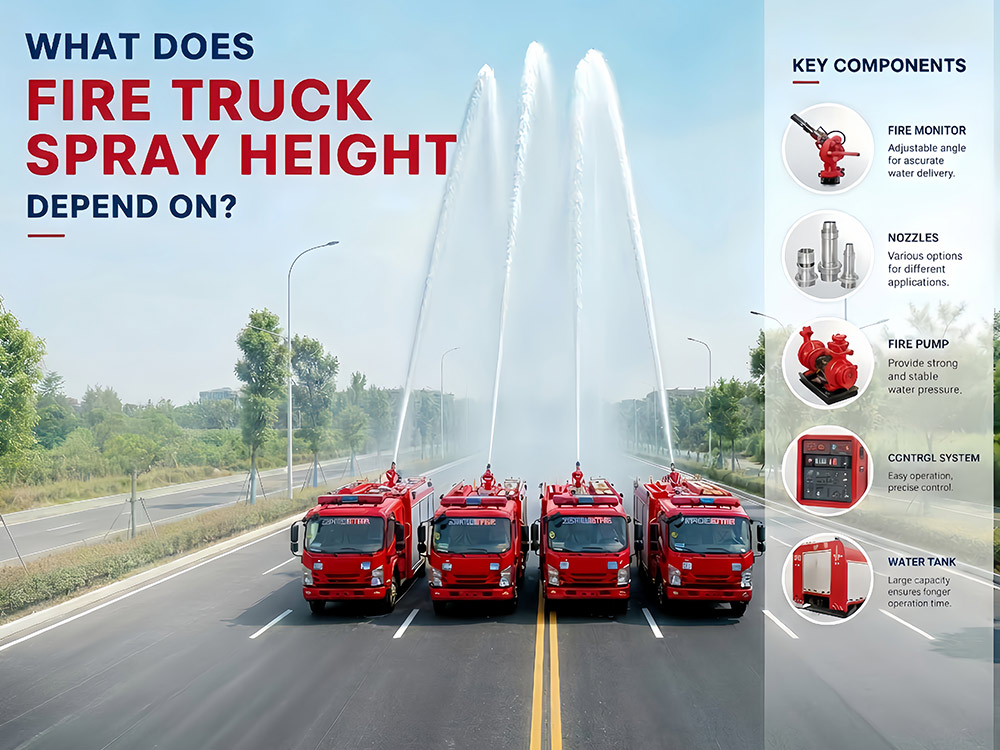
El sistema de bomba y rociado del camión de bomberos es el núcleo de las operaciones de extinción de incendios. Actúa como el "brazo potente" del camión de bomberos. Al convertir la potencia del motor en presión (que va de 0,8 a 1,4 MPa), suministra agentes extintores a alturas de hasta 85 metros; ya sea un incendio en un edificio de gran altura en un centro urbano densamente poblado o un incendio en un tanque de almacenamiento petroquímico en una zona industrial, el camión de bomberos depende de este sistema para lograr una supresión eficaz de incendios. ¿Qué factores afectan la altura de rociado de un camión de bomberos y cómo trabajan juntos la presión de la bomba, el caudal y el monitor contra incendios? Estos son aspectos que interesan a muchos clientes. Aprendamos sobre ello hoy. » I. Tres componentes clave que determinan la altura de rociado 1. Sistema de bomba contra incendios: El corazón del camión de bomberos. Bomba centrífuga accionada por toma de fuerza (PTO). Grados de presión comunes: 0,8 MPa, 1,0 MPa, 1,2 MPa, 1,4 MPa. Caudales de 2.000 a más de 5.000 L/min. 2. Monitor contra incendios: El componente final antes de que el agente extintor salga del camión. Disponible en monitor de agua, monitor de espuma y monitor de doble propósito. La serie PL (PL48) con caudales de hasta 4.000 L/min y altura de rociado superior a 70 metros. 3. Sistema de suministro: Tuberías, mangueras y boquillas que transportan el agente extintor desde la bomba hasta el monitor. El diámetro de la manguera, la longitud y el tipo de boquilla afectan la altura final de rociado. » II. Factores principales que determinan la altura de rociado 1.1. Presión de la bomba La presión de la bomba del camión de bomberos es la fuerza generada por la bomba contra incendios para impulsar el agente extintor a través de las mangueras y descargarlo desde las boquillas o monitores. Es el principal factor que determina tanto el caudal como la distancia de rociado. Una mayor presión produce una mayor velocidad en la salida del monitor, aumentando directamente la altura de rociado. La relación se rige por la fórmula H ≈ P/(ρg), donde cada aumento de 0,1 MPa añade aproximadamente 10 metros de altura teórica, pero las pérdidas reales reducen este valor. En las operaciones prácticas de extinción de incendios, se aplican los siguientes rangos: Presión de la bomba Altura de rociado habitual 0,8 MPa 35–45 metros 1,0 MPa 45–55 metros 1,2 MPa 55–70 metros 1,4 MPa 70–85 metros 1.2. Cómo funciona la bomba contra incendios: La bomba suele ser una bomba centrífuga accionada por el motor del camión mediante una toma de fuerza (PTO). A medida que el impulsor gira, aspira el agente extintor y lo expulsa hacia el exterior mediante fuerza centrífuga, creando presión que lo impulsa a través del sistema de descarga. Presión nominal frente a presión de funcionamiento: Término Definición Presión nominal La presión máxima que la bomba puede mantener de forma continua bajo condiciones de diseño Presión de f...
Detalles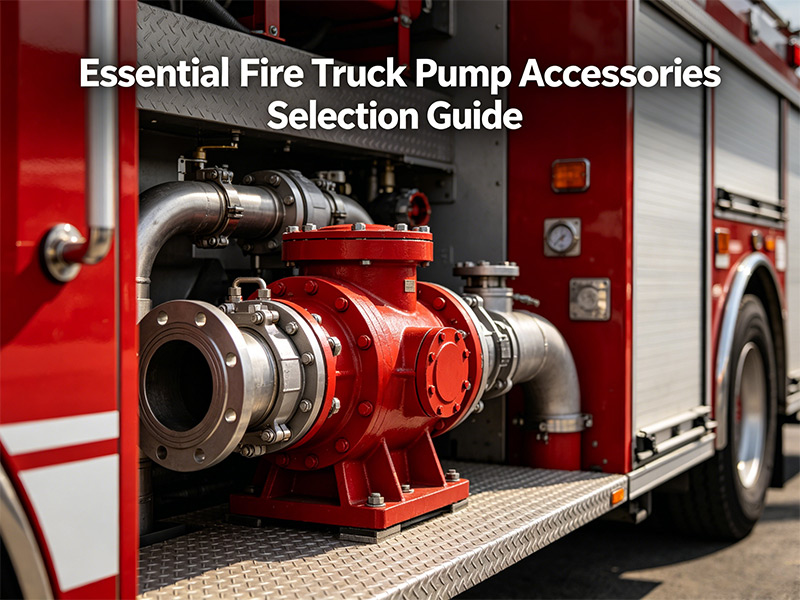
Un sistema de bomba de camión de bomberos solo es tan fiable como sus componentes. Desde extraer agua de una fuente hasta descargarla a alta presión, cada accesorio desempeña un papel fundamental. Esta guía cubrecamión de bomberos cinco categorías clave de accesorios: cebadores, válvulas de bola, válvulas de globo, proporcionadores de espuma y sistemas de control hidráulico. Comprender estos componentes ayuda a los bomberos a mantener su equipo y elegir los accesorios adecuados para aplicaciones específicas. I. Serie de cebadores (dispositivos de cebado por vacío) Los cebadores son esenciales para extraer agua de lagos, ríos u otras fuentes estáticas cuando no hay un hidrante disponible. Eliminan el aire de la bomba y la manguera de succión, permitiendo que la presión atmosférica empuje el agua hacia la bomba. Descripción general del producto Producto Vacío máximo Voltaje Potencia Tamaño de bomba adecuado Cebador de 2 pistones >85kPa 24V - Por debajo de 100 L/s Cebador eléctrico de 2 pistones >85kPa 24V 2.1KW Por debajo de 100 L/s Cebador de 4 pistones >85kPa 24V - Por encima de 100 L/s Cebador eléctrico de 4 pistones >85kPa 24V 2.1KW Por encima de 100 L/s Característica clave: cebadores eléctricos Los cebadores eléctricos ofrecen una ventaja significativa: pueden cebar la bomba sin que la bomba gire. Esto protege el sello mecánico de daños por funcionamiento en seco. Cuando un cebador estándar requiere que la bomba gire, la versión eléctrica funciona de manera independiente, prolongando la vida útil del sello. II. Serie de válvulas de bola (control de flujo) Las válvulas de bola controlan el flujo de agua a través de las mangueras y las salidas de descarga. Están diseñadas para una operación rápida de encendido/apagado con un simple giro de 90°. Válvulas de bola de acero inoxidable Modelo Material Presión nominal Rosca Operación FQS65/2.5 Cuerpo y bola: acero inoxidable 304; Sello: PTFE 2.5 MPa G2-1/2" Volante / Palanca FQS80/2.5 Cuerpo y bola: acero inoxidable 304; Sello: PTFE 2.5 MPa G3" Volante / Palanca Válvulas de bola de aleación de aluminio (menor peso) Modelo Material Presión nominal Rosca Operación FQS65/2.5 Cuerpo: A356.2; Bola: 304; Sello: PTFE 2.5 MPa G2.5" Volante / Palanca FQS80/1.6 Cuerpo: A356.2; Bola: 304; Sello: PTFE 1.6 MPa G3" Volante / Palanca FQS65/2.5 Cuadrada Cuerpo: A356.2; Bola: 304; Sello: PTFE 2.5 MPa - Neumático / Palanca Ⅲ. Serie de válvulas de globo (regulación de presión y flujo) A diferencia de las válvulas de bola, diseñadas para operaciones de apertura y cierre, las válvulas de globo permiten un control preciso del caudal y la presión. Son ideales para situaciones donde se necesita un ajuste gradual. Modelo Material Presión nominal Rosca Operación DN65/2.5 Cuerpo: A356.2; Vástago: H62; Sello: NBR 2.5 MPa G2.5" Volante DN80/2.5 Cuerpo: A356.2; Vástago: H62; Sello: NBR 2.5 MPa G3" Volante Cuándo usar una válvula de globo Utilice válvulas de globo en puntos de descarga donde se ...
Detalles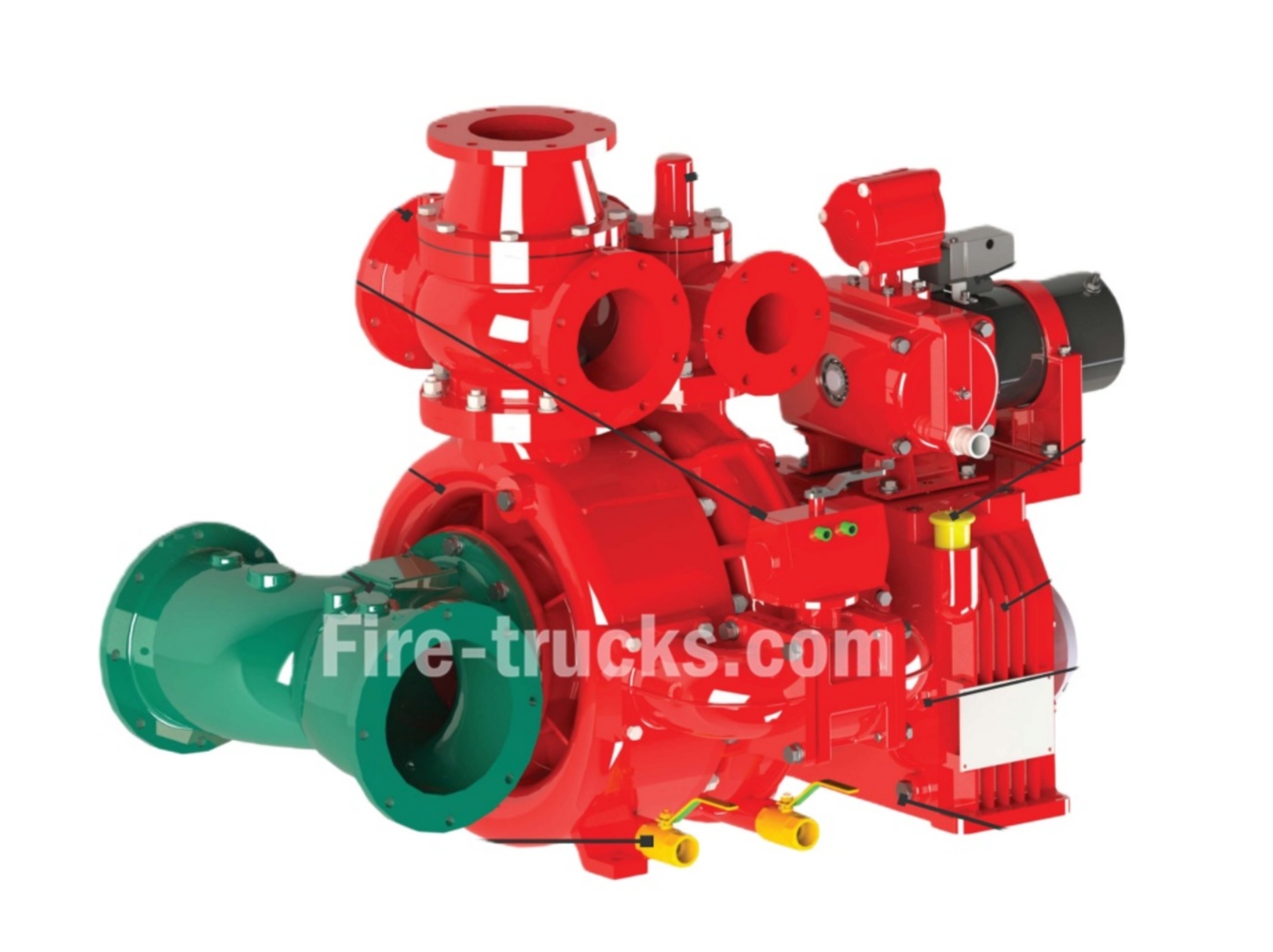
Como xiongzhen profesional fabricante de bombas contra incendios En China, Camiones Powerstar Posee su propia marca "Xiongzhen", una serie de productos que incluye bombas contra incendios de baja presión, bombas contra incendios de media-baja presión y bombas contra incendios de alta-baja presión para vehículos, así como equipos auxiliares como monitores de incendios y dosificadores de espuma. Sus bombas contra incendios utilizan nuevos materiales, como aleación de aluminio y acero inoxidable, y están equipadas con un dispositivo de desconexión automática con embrague electromagnético y una válvula de retención, ofreciendo un excelente rendimiento, un funcionamiento sencillo y un mantenimiento práctico. Los productos de la compañía han superado las pruebas de tipo del Centro Nacional de Supervisión e Inspección de Calidad de Equipos contra Incendios, la certificación CCC y la certificación del sistema de gestión de calidad ISO 9001. Las bombas contra incendios Xiongzhen incluyen principalmente los siguientes modelos: CB10/20-XZ, CB10/30-XZ , CB10/40-XZ, CB10/60-XZ , CB10/80-XZ, CB10/100-XZ, CB20.10/15.30-XZ, CB20.10/20.40-XZ, CB20.10/30.60-XZ, etc. BOMBA CONTRA INCENDIOS CB10/20-XZ para camiones de bomberos BOMBAS CONTRA INCENDIOS CB10/30-XZ para camiones de bomberos Bombas contra incendios modelo CB10/40-XZ para camión de bomberos China Bombas contra incendios modelo CB10-60 para camiones de rescate de incendios Bombas de emergencia contra incendios CB10/80-XZ para camiones de bomberos Bombas contra incendios CB10/100-XZ para vehículos de bomberos Especificaciones del sistema de bomba contra incendios Xiongzhen CB10/100-XZ Fabricantes de bombas contra incendios de la serie CB de Xiongzhen Especificaciones de los conjuntos de bombas contra incendios CB10/150 Sistema de bomba contra incendios CB10/160-XZ de la fábrica de Xiongzhen Especificaciones de las bombas de emergencia contra incendios CB10/170-XZ Los camiones Powerstar cuentan con sólidas capacidades técnicas, cuatro patentes y utilizan equipos de producción avanzados, como diseño CAD y máquinas herramienta CNC, para garantizar altos índices de calificación de productos y la satisfacción del cliente. Sus productos están dirigidos principalmente a plantas de modificación de camiones de bomberos y brigadas de bomberos. Especificaciones de la bomba contra incendios CB20.10 20.40 Bomba contra incendios CB20.10 30.60-XZ de la fábrica Xiongzhen Bomba contra incendios serie CB20/15-XZ Bomba contra incendios de emergencia serie CB20/20-XZ Instalación de bomba contra incendios CB20 25 detalles Aquí tienes un programa de mantenimiento para tu XIONGZHEN bombas contra incendios , categorizado por semana, mes, trimestre y año para fácil referencia: 01, Inspección diaria de la bomba contra incendios Powersar: Verifique la presión y la frecuencia de arranque y parada de la bomba estabilizadora de presión. Verifique la energía de la batería de arranque de la bomba contra incendios del motor diésel. Verifiq...
Detalles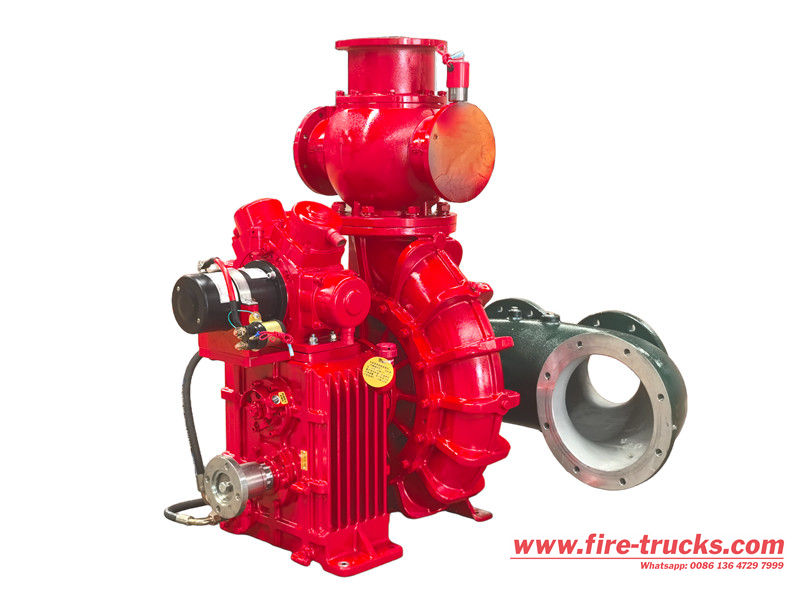
La bomba de espuma contra incendios CB10/140 es un sistema de suministro de agua contra incendios de uso común, ya sea fijo o montado en vehículo, con una presión nominal de 1.0 MPa y un caudal nominal de 140 L/s, que satisface las necesidades básicas de suministro de agua de los sistemas contra incendios. El cuerpo de la bomba y el impulsor están fabricados con materiales de alta calidad y resistentes al desgaste, lo que ofrece resistencia a la corrosión y a altas presiones. Cuenta con un diseño de doble entrada para un cambio rápido de fuente de agua y está accionado por un motor de alta eficiencia o un motor diésel, lo que permite un tiempo de respuesta de arranque de 30 segundos o menos. Gracias a su diseño compacto, fácil mantenimiento y funcionamiento fiable, el... Bomba contra incendios de espuma CB10/140 Es un equipo vital para garantizar un suministro de agua eficiente para las operaciones de extinción de incendios. La bomba contra incendios de baja presión CB10/140-XZ, montada en camión, presenta una estructura centrífuga monoetapa con carcasa de aleación de aluminio y un impulsor de latón. Utiliza un sistema eléctrico de cebado de agua de cuatro pistones con conmutación eléctrica. La bomba de espuma CB10/20 opcional utiliza un mecanismo de separación neumático. Este producto ofrece un excelente rendimiento, una estructura compacta, un funcionamiento sencillo y un mantenimiento sencillo. La bomba contra incendios CB10/140-XZ es una bomba de agua centrífuga monoetapa utilizada en camiones de bomberos. Se caracteriza por su dispositivo de cebado de dos pistones que se activa y desactiva automáticamente. Está diseñada para un alto rendimiento con una estructura compacta, fácil operación y mantenimiento conveniente. Sus especificaciones principales incluyen un caudal de 140 L/s y una presión de salida de 1,0 MPa a una velocidad nominal de 2600 r/min. » . Principio de funcionamiento de la bomba de extinción de incendios de espuma CB10/140 ● Ingesta de agua y concentrado de espuma: El agua se extrae de un suministro y el concentrado de espuma se extrae de su tanque de almacenamiento. ● Proporción: El dosificador mezcla el concentrado de espuma con el agua en una proporción predeterminada. ● Presurización: La bomba presuriza la mezcla, aumentando su velocidad y presión. ● Descargar: La solución de espuma presurizada se impulsa a través de la manguera de descarga hasta la boquilla, donde se descarga sobre el fuego. ● Supresión de incendios: La espuma cubre la fuente de combustible, separándola del oxígeno y extinguiendo el fuego. » . Introducción detallada de la bomba contra incendios de espuma CB10/140 1. Diseño estructural superior, rendimiento estable y confiable: ● El Bomba contra incendios CB10/140 Presenta un diseño centrífugo de una sola etapa y está construido con aleación de aluminio de alta resistencia, ofreciendo ventajas como peso ligero, resistencia a la corrosión y resistencia a altas temperaturas. ● La estructura interna de la bo...
Detalles
Por favor, siga leyendo, manténgase informado, suscríbase, y le invitamos a que nos diga qué piensa.

 Network IPv6 compatible con

 español
 English
 français
 Deutsch
 русский
 italiano
 português
 Nederlands
 العربية
 日本語
日本語 한국의
한국의 Türkçe
 Melayu
 ไทย
ไทย Tiếng Việt
 Indonesia
  中文
中文 қазақ
қазақ Filipino
 မြန်မာ
 српски