Deja un mensaje
Si está interesado en nuestros productos y desea obtener más información, deje un mensaje aquí, le responderemos lo antes posible.

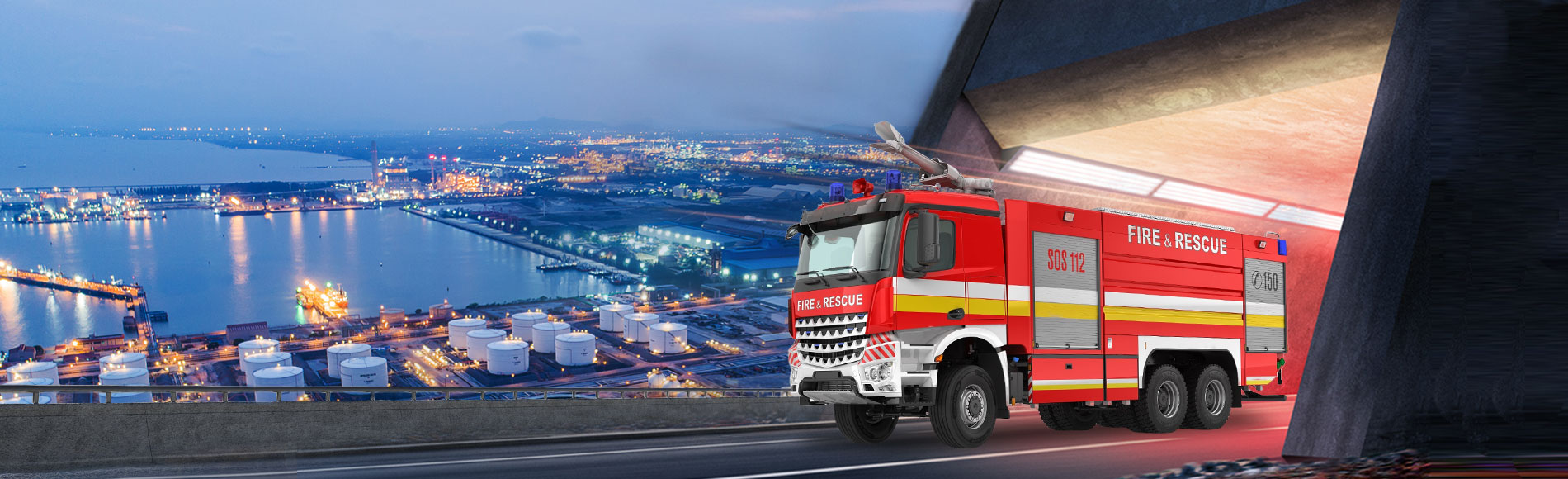
¿Qué camiones de bomberos son mejores para la extinción de incendios forestales? Guía de tipos, características y selección
La lucha contra incendios forestales presenta desafíos que son fundamentalmente diferentes de los de la lucha contra incendios estructurales. En bosques remotos, pastizales y terrenos montañosos, los camiones de bomberos deben desplazarse por senderos estrechos, subir pendientes pronunciadas y operar lejos de hidrantes o fuentes de agua. Elegir el camión delucha contra incendiosadecuado es una decisión estratégica que afecta directamente el tiempo de respuesta, la seguridad de la tripulación y la eficacia de la extinción del incendio.
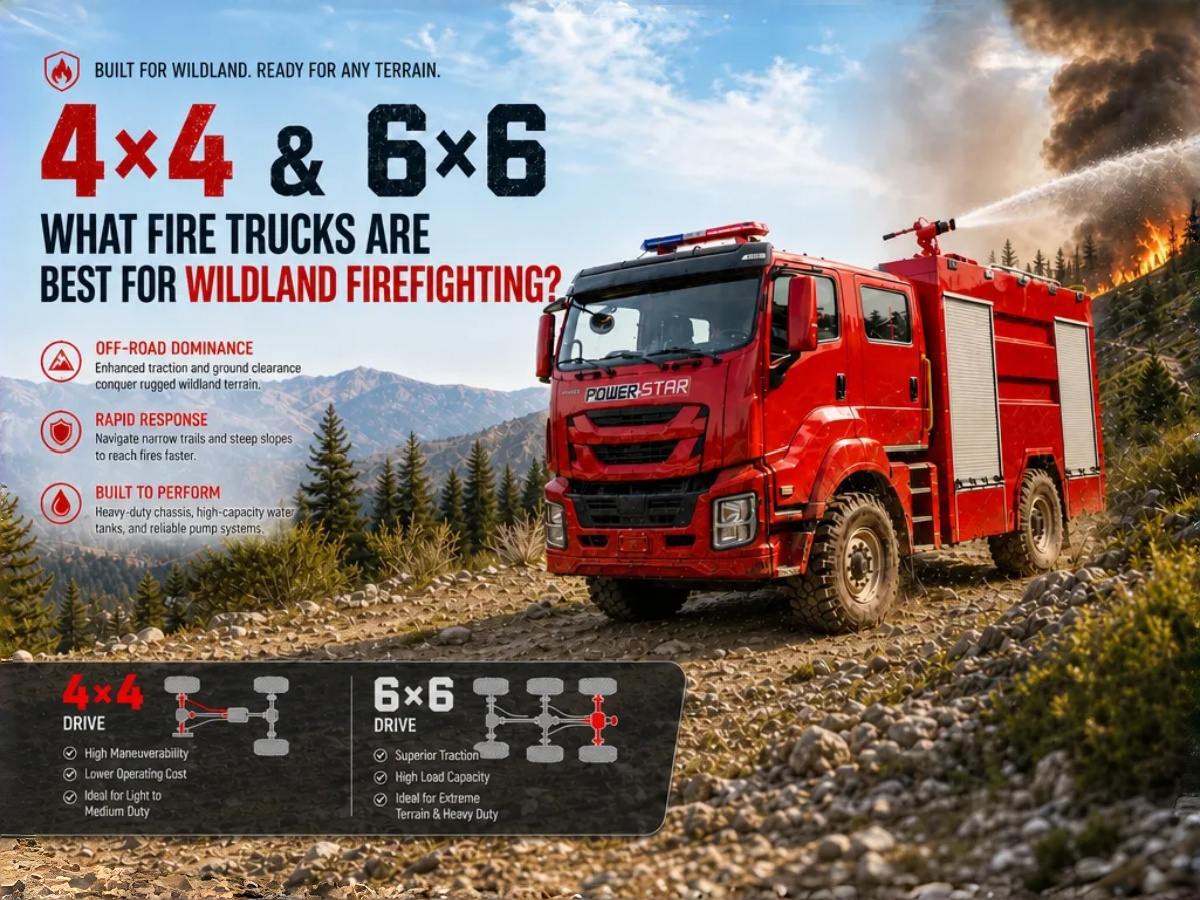
Este artículo ofrece un análisis completo de los tipos de camiones de bomberos más adecuados para la lucha contra incendios forestales, sus características principales y métodos de selección, ayudándole a tomar la decisión correcta según sus requisitos operativos específicos.
Los incendios forestales se caracterizan por grandes áreas afectadas por el fuego, terrenos complejos, fuentes de agua limitadas y malas condiciones de las carreteras, por lo que no existe un único camión de bomberos que pueda manejar todos los escenarios de incendios forestales.
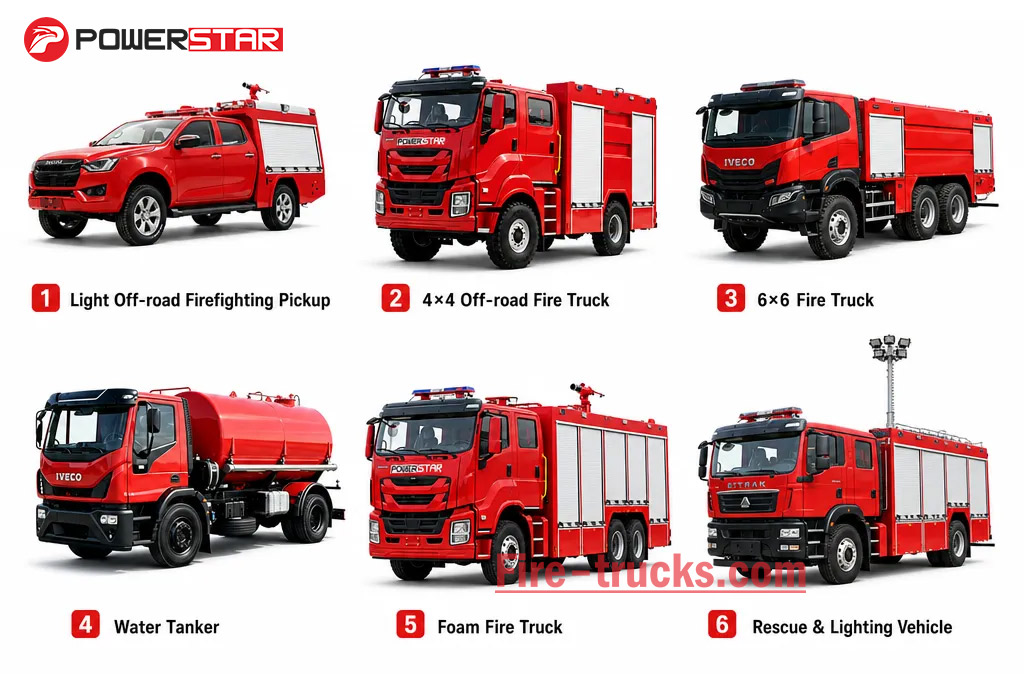
En términos generales, la lucha contra incendios forestales utiliza principalmente los siguientes tipos de camiones de bomberos:
• Camiones ligeros para incendios forestales: para acceso por caminos forestales y respuesta rápida
• Camiones todoterreno 4×4 para incendios forestales: para terrenos montañosos y con colinas
• Camiones 6×6 para incendios forestales: para incendios forestales a gran escala y operaciones prolongadas
• Camiones cisterna de agua: para suministro continuo de agua y apoyo
• Camiones de espuma contra incendios: para instalaciones petroleras, equipos forestales o incendios especiales
• Vehículos de rescate: para comunicación, iluminación, apertura de accesos y apoyo logístico
Los incendios forestales se diferencian fundamentalmente de los incendios estructurales en varios aspectos críticos:
Características clave de los incendios forestales:
• Grandes áreas afectadas por el fuego que cubren hectáreas de terreno
• Direcciones del viento que cambian rápidamente
• Terrenos complejos y accidentados
• Acceso limitado o inexistente a hidrantes o fuentes de agua
• Caminos forestales estrechos y sin pavimentar
• Condiciones difíciles de comunicación
Los camiones de bomberos urbanos estándar generalmente no son adecuados para la lucha contra incendios forestales por las siguientes razones:
•Carecen de tracción 4×4 o tracción en todas las ruedas para caminos de montaña sin pavimentar y pendientes pronunciadas;
•El mayor tamaño y la baja altura libre al suelo hacen que sean propensos a quedar atascados en senderos forestales estrechos y terrenos blandos;
•Las bombas urbanas priorizan un alto caudal a presión moderada, mientras que las operaciones forestales requieren alta presión en tendidos largos de manguera con agua limitada, un enfoque fundamentalmente diferente.
| Tipo de camión de bomberos | Características principales | Escenarios aplicables |
| Camión ligero para incendios forestales | Alta movilidad, tamaño compacto | Patrullaje forestal, ataque inicial |
| Camión 4x4 para incendios forestales | Gran capacidad todoterreno | Terreno montañoso y con colinas |
| Camión 6x6 para incendios forestales | Gran capacidad de agua, larga autonomía | Incendios forestales a gran escala |
| Camión cisterna de agua | Suministro continuo de agua | Apoyo logístico, relevo de agua |
| Camión de bomberos con espuma | Extinción de incendios especializada | Depósitos de petróleo forestales, áreas de equipos |
| Vehículo de rescate | Transporte de equipos | Operaciones integrales de rescate |
Los camiones de bomberos forestales requieren un sólido rendimiento todoterreno para operar eficazmente en terrenos desafiantes:
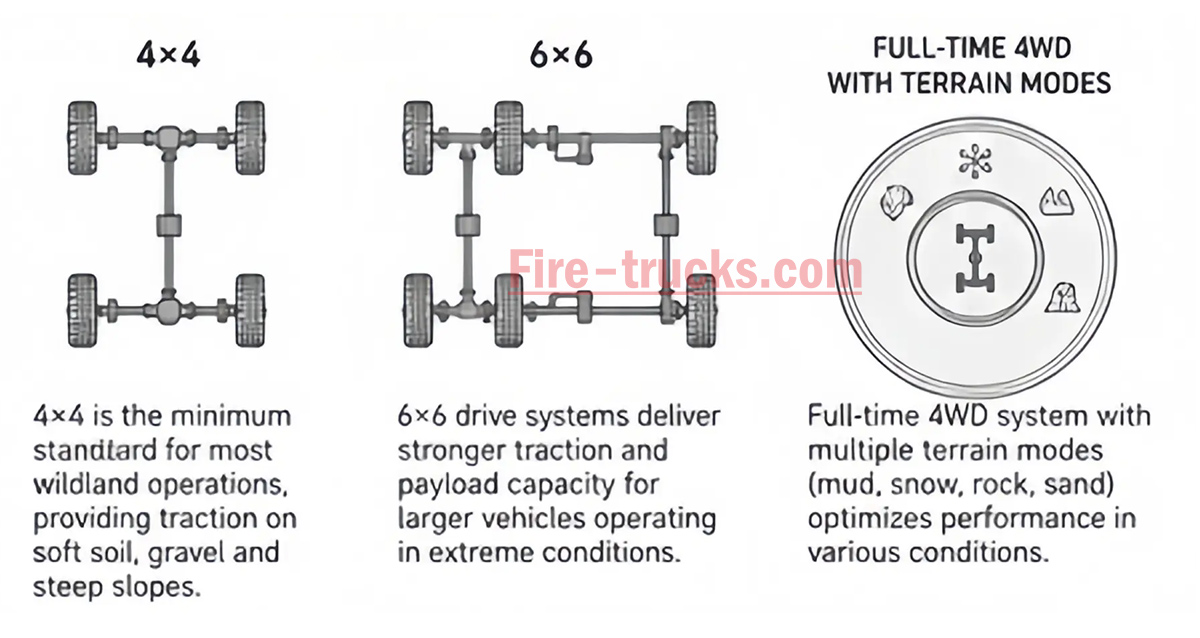
Configuración de tracción:
• La tracción 4×4 es el estándar mínimo para la mayoría de las operaciones forestales, proporcionando agarre en suelo suelto, grava y pendientes pronunciadas
• La tracción 6×6 ofrece mayor agarre y capacidad de carga para vehículos más grandes que operan en condiciones extremas
• La tracción integral permanente con múltiples modos de terreno (barro, nieve, roca, arena) proporciona un rendimiento optimizado en diversas condiciones
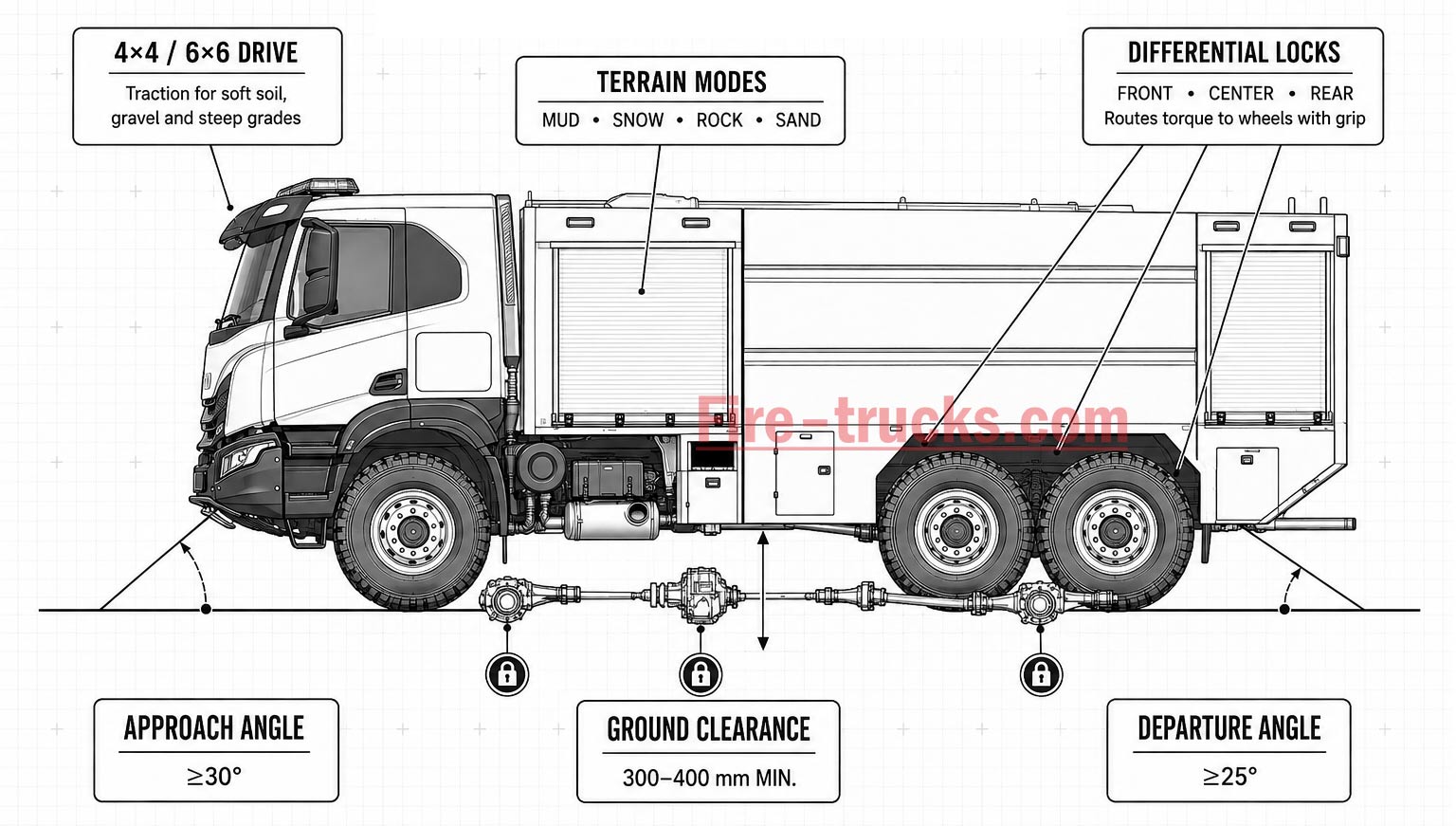
Bloqueos de diferencial:Los bloqueos de diferencial delantero, central y trasero garantizan que la potencia se distribuya a las ruedas con tracción cuando otras pierden agarre, algo fundamental para atravesar terrenos irregulares y evitar la inmovilización.
Altura libre al suelo:Una altura libre al suelo mínima de 300-400 mm permite que el vehículo supere rocas, ramas caídas y terrenos irregulares sin daños en la parte inferior de la carrocería.
Ángulos de ataque y salida:
• Un ángulo de ataque ≥30° evita que el parachoques delantero golpee pendientes u obstáculos
• Un ángulo de salida ≥25° evita que la parte trasera arrastre al descender pendientes pronunciadas
En la extinción de incendios forestales, la capacidad del tanque de agua debe equilibrarse con la movilidad y el peso del vehículo:
Por qué más grande no siempre es mejor:
• Los tanques de agua más grandes añaden un peso considerable, aumentando el riesgo de quedar atascado en suelos forestales blandos
• Los vehículos pesados tienen centros de gravedad más altos, aumentando el riesgo de vuelco en pendientes laterales
• Los vehículos más pesados causan más daños a caminos y senderos forestales
• El consumo de combustible aumenta con el peso, reduciendo la autonomía operativa
Capacidades de tanque recomendadas según el tipo de misión:
| Tipo de misión | Capacidad recomendada del tanque | Justificación |
|---|---|---|
| Ataque rápido / patrulla | 1.500-2.000 L | Ligero para velocidad y movilidad |
| Ataque inicial (estándar) | 2.000-3.000L | Capacidad y movilidad equilibradas |
| Operaciones prolongadas | 3.000-5.000L | Mayor autonomía con movilidad moderada |
| Suministro de agua / relevo | 5.000-8.000L | Máxima capacidad, solo para carretera o todoterreno limitado |
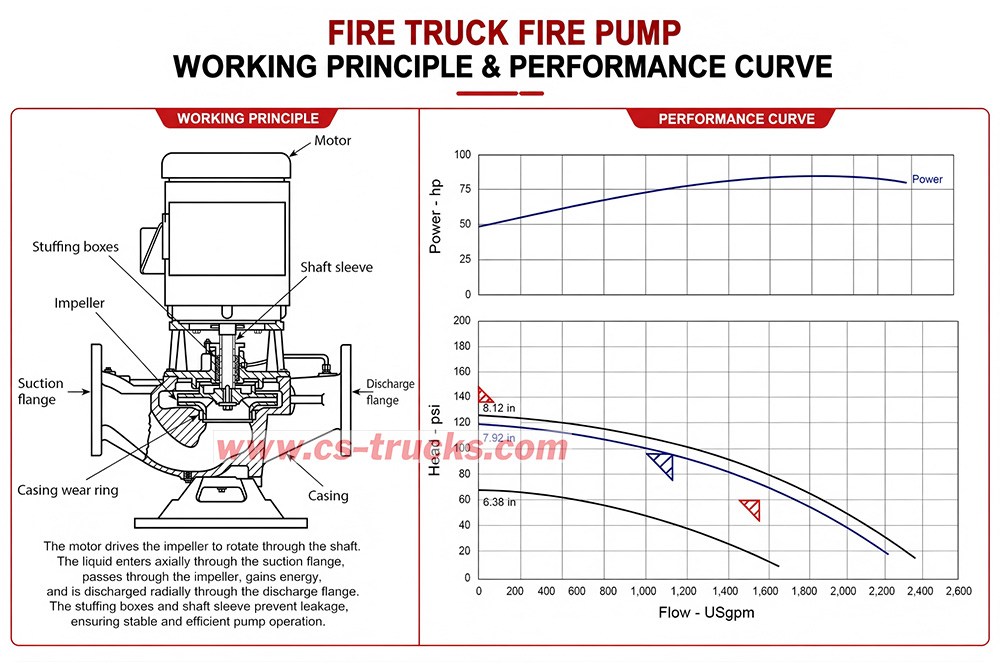
La bomba es el corazón de cualquier camión de bomberos forestales. Las bombas forestales difieren fundamentalmente de las bombas estructurales:
| Parámetro | Bomba contra incendios urbana | Bomba contra incendios forestal |
|---|---|---|
| Caudal | Alto (1.000-2.000 GPM) | Moderado (30-150 GPM) |
| Presión | Media (150-200 psi) | Alta (250-400 psi) |
| Enfoque | Volumen para suministro mediante hidrantes | Presión para tendidos de manguera largos |
| Aspiración | Ocasional | Frecuente desde fuentes naturales |
Por qué las bombas forestales priorizan la alta presión:
• Los tendidos de manguera largos (hasta más de 1.000 pies) requieren alta presión para superar la pérdida por fricción
• La alta presión permite que el agua alcance incendios en pendientes pronunciadas y terrenos elevados
• El uso eficiente del agua maximiza el efecto de supresión con un suministro limitado a bordo
Sistemas de niebla de alta presión:
• Descomponen el agua en gotas ultrafinas (≤1mm) para lograr la máxima eficiencia de enfriamiento
• Reducen el consumo de agua hasta un 70% en comparación con chorros estándar
• Permiten una reducción rápida de la temperatura y la disminución del humo
• Son eficaces para el ataque inicial antes de que lleguen grandes suministros de agua
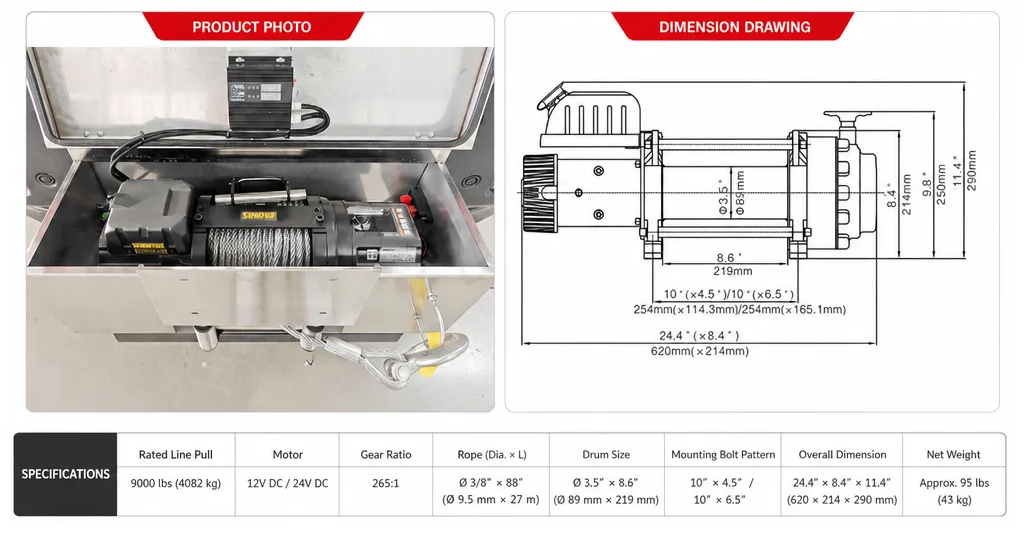
Los cabrestantes son equipos esenciales para los camiones de bomberos forestales que operan en terrenos remotos:
• Autorecuperación:Tira del vehículo para liberarlo cuando queda atascado en barro, arena o suelo forestal blando
• Eliminación de obstáculos:Arrastrar árboles caídos, rocas o escombros que bloqueen la carretera
•Asistir a otros vehículos:Recuperar o reposicionar otros equipos atascados
•Operaciones de rescate:Acceder a áreas inaccesibles por otros medios
Configuración recomendada:Cabrestante montado en la parte delantera con una capacidad mínima de tracción de 8.000-10.000 lb, con cuerda sintética para mayor seguridad y menor peso.
Los camiones de bomberos forestales deben protegerse a sí mismos cuando operan dentro o cerca de frentes de fuego activos:
Sistema de pulverización del chasis:Las boquillas de pulverización de agua debajo del vehículo enfrían el chasis, los neumáticos y los componentes inferiores, evitando daños por calor y la ignición de los neumáticos al conducir sobre terreno en llamas.
Sistema de pulverización de la cabina:El agua se pulveriza sobre el parabrisas y el exterior de la cabina para reducir el calor radiante y mantener la visibilidad, permitiendo que los bomberos permanezcan en el vehículo durante una exposición extrema al calor.
Sistema de pulverización de neumáticos:Dirige agua hacia los neumáticos para evitar que el caucho se ablande, se derrita o se incendie al operar cerca de llamas o sobre superficies calientes.
Al especificar vehículos contra incendios forestales, priorice los siguientes parámetros:
•Marca y modelo del chasis:Marcas reconocidas con fiabilidad todoterreno demostrada y soporte de servicio disponible
•Potencia del motor:Caballos de fuerza adecuados para subir pendientes pronunciadas con carga completa de agua (normalmente 250-400+ HP)
•Configuración de tracción:4×4 como mínimo, 6×6 para vehículos más grandes o terrenos extremos
•Capacidad del tanque de agua:Adaptada a los requisitos de la misión y al terreno (consulte la Sección III.2)
•Caudal y presión de la bomba:Mínimo 30 GPM a 250 psi para Tipo 6, 150 GPM a 250 psi para Tipo 3
•Pendiente máxima superable:Al menos 30° (60% de pendiente) para operaciones en montaña
•Radio de giro mínimo:Lo suficientemente compacto para curvas cerradas de caminos forestales (normalmente ≤10 metros)
•Sistema de autoprotección:Boquillas de pulverización en el chasis y la cabina para operaciones frente al fuego
•Configuración del cabrestante:Cabrestante montado en la parte delantera con suficiente capacidad de tracción
•Diseño del compartimento de equipos:Diseño modular con fácil acceso para un despliegue rápido
•Accesibilidad para mantenimiento:Fácil acceso a los puntos de servicio para reparaciones en campo y mantenimiento rutinario
1. ¿Un camión de bomberos forestal siempre necesita tracción 4×4?
La mayoría de las operaciones de extinción de incendios forestales recomiendan tracción 4×4 o 6×6 para mejorar la capacidad todoterreno en terrenos complejos.
2. ¿Qué tamaño de tanque de agua necesita un camión de bomberos forestal?
Las configuraciones habituales van de 2.000 L a 8.000 L. La selección debe basarse en las condiciones de los caminos y los requisitos de la misión.
3. ¿Por qué los camiones de bomberos forestales suelen ser más pequeños que los camiones de bomberos urbanos?
Los vehículos más pequeños pueden desplazarse con mayor facilidad por caminos forestales, puentes y senderos montañosos estrechos, al tiempo que reducen el riesgo de quedar atascados.
4. ¿Se puede utilizar espuma en la extinción de incendios forestales?
Sí, pero principalmente para instalaciones petroleras forestales, equipos mecánicos o escenarios especiales de incendio. Los incendios de vegetación estándar todavía se combaten principalmente con agua.
5. ¿Por qué los camiones de bomberos forestales necesitan cabrestantes?
Los cabrestantes permiten la recuperación autónoma del vehículo, la retirada de obstáculos y la asistencia a otros vehículos atascados. Son equipos esenciales para operaciones remotas.
6. ¿Cuál es la especificación más importante al comprar un camión de bomberos forestal?
El rendimiento todoterreno, la fiabilidad, la resistencia, el rendimiento de la bomba y la accesibilidad para mantenimiento suelen ser más importantes que simplemente buscar una mayor capacidad del tanque de agua.
La extinción de incendios forestales es una misión que exige una movilidad excepcional del vehículo, fiabilidad y capacidad operativa sostenida. Los diferentes entornos forestales y tipos de incendio requieren distintas configuraciones de vehículos. Los camiones ligeros de bomberos forestales destacan en la respuesta rápida; los modelos 4×4 y 6×6 son adecuados para terrenos complejos; los camiones cisterna de agua y los vehículos logísticos se encargan del suministro continuo de agua y del apoyo.


Puede estar interesado en la siguiente información
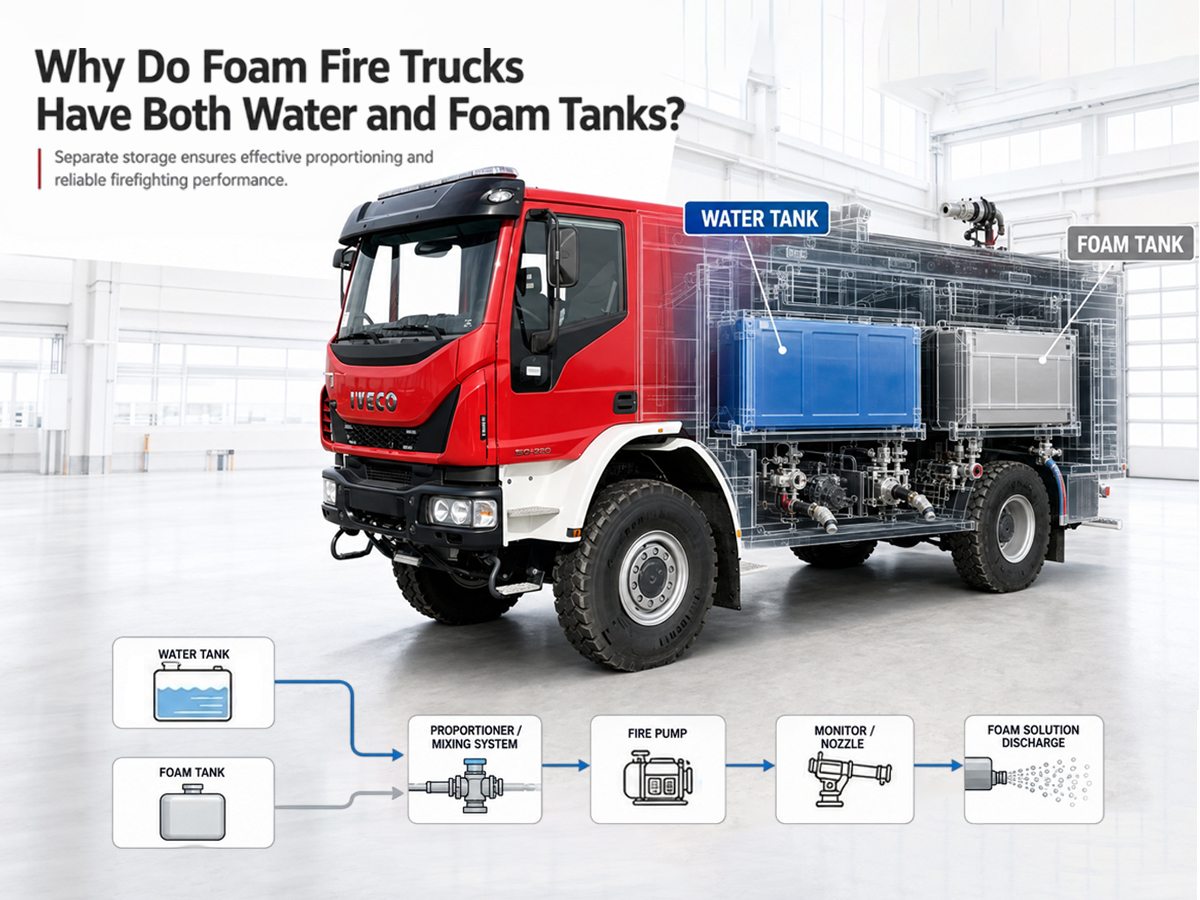
Los camiones de bomberos de espuma combinan un tanque dedicado para el concentrado de espuma con un tanque de agua separado y un sistema de dosificación de precisión. Utilizan un sistema de dosificación para introducir el concentrado de espuma en el flujo de agua a una concentración específica, comúnmente del 1%, 3% o 6%, dependiendo del concentrado de espuma y la aplicación de extinción de incendios.tanque dobleEl diseño permite a los bomberos usar solo agua cuando no se requiere espuma e introducir concentrado de espuma únicamente cuando sea necesario. Esto mejora la flexibilidad operativa, ayuda a controlar el consumo de espuma y permite configurar el sistema de extinción de incendios para diferentes riesgos. El principio de funcionamiento fundamental y la tecnología clave de los camiones de bomberos con espuma, en particular el motivo por el que cuentan con depósitos tanto de agua como de espuma, son aspectos que interesan a muchos clientes. Hoy vamos a analizarlos. Respuesta rápida: Los camiones de bomberos equipados con espuma suelen utilizar depósitos separados para el agua y el concentrado de espuma, ya que se requieren en proporciones diferentes y se combinan durante la operación, en lugar de almacenarse como una solución premezclada durante largos periodos. El depósito de agua proporciona el suministro principal, mientras que el de espuma almacena el agente espumante concentrado. Un sistema de dosificación controla la cantidad de concentrado que se introduce en el chorro de agua, lo que permite al camión alternar entre el modo de extinción con agua sola y el modo de extinción con espuma. I. ¿Cuáles son los componentes principales de un camión de bomberos de espuma? 1. Tanque de agua Construcción resistente a la corrosión (acero al carbono con revestimiento anticorrosión o acero inoxidable), con capacidades que van desde los 4.000 hasta los 6.000 litros. Equipado con deflectores para reducir las salpicaduras de líquido durante el movimiento del vehículo y soportes flexibles para absorber la flexión del chasis en terrenos irregulares. 2. Tanque de concentrado de espuma Fabricado en acero inoxidable para resistir el ataque químico de concentrados de espuma activa, con una capacidad típica de 500 a 2000 litros. Dependiendo del concentrado de espuma y del diseño del sistema, el tanque puede incorporar características como sistemas de circulación o agitación para ayudar a mantener el concentrado en buen estado durante el almacenamiento. 3. Sistema de dosificación de espuma Un sistema de dosificación que extrae el concentrado de espuma del depósito dedicado.espumaEl sistema introduce el concentrado de espuma en el tanque y lo añade al flujo de agua a una concentración específica. Dependiendo del concentrado de espuma y del diseño del sistema, la dosificación puede realizarse mediante presión equilibrada, bombeo o tecnología basada en venturi. 4. Bomba contra incendios La bomba contra incendios es la fuente de energía de todo el sis...
Detalles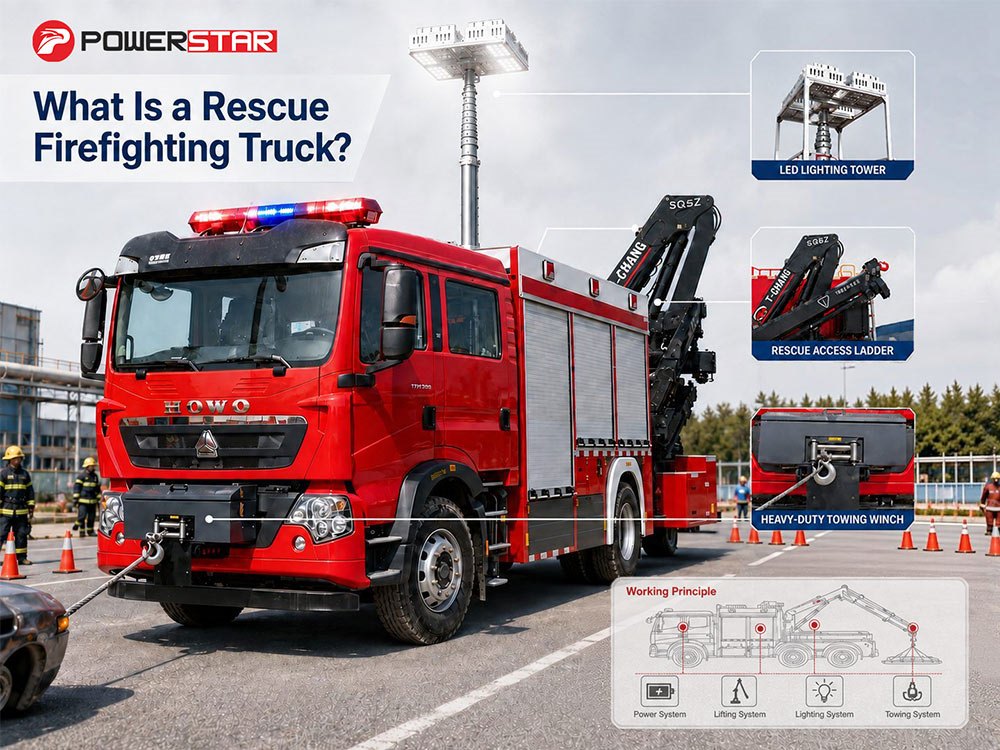
Un camión de rescate contra incendios es un vehículo de emergencia especializado diseñado para realizar operaciones tanto de extinción de incendios como de rescate. A diferencia de los camiones de bomberos estándar que se centran principalmente en la extinción de incendios,camiones de rescate y extinción de incendiosCombinar equipos de extinción de incendios con herramientas de rescate, dispositivos de elevación y izamiento, herramientas de corte y dispersión, cabrestantes, generadores y sistemas de iluminación. Este artículo explica qué es un camión de rescate contra incendios, en qué se diferencia de otros vehículos de bomberos, qué equipo transporta y cuándo se despliega. I. ¿Qué es un camión de rescate y extinción de incendios? Un camión de rescate y extinción de incendios es un vehículo de emergencia multiusos que combina la capacidad de combatir incendios con equipos de rescate especializados. Se utiliza principalmente para brindar una respuesta integral ante emergencias que involucren personas, vehículos, edificios o instalaciones industriales. Según la configuración del vehículo, los camiones de bomberos y rescate pueden equiparse con una amplia variedad de herramientas y sistemas de extinción de incendios. La selección del equipo varía según el uso previsto del vehículo. Por ejemplo, un vehículo configurado para rescate urbano puede tener una distribución de equipo diferente a la de uno diseñado para rescate industrial, respuesta a terremotos o recuperación tras accidentes de tráfico en carretera. II. ¿Qué equipo lleva un camión de rescate y extinción de incendios? El equipamiento que lleva un camión de bomberos de rescate depende del diseño del vehículo y de su uso previsto. Sin embargo, en la mayoría de los modelos, el equipamiento se puede organizar en varias categorías principales: equipos de extinción de incendios, herramientas de rescate, equipos eléctricos, equipos de iluminación, dispositivos de elevación y remolque, y equipos de protección personal. 1. Equipos de extinción de incendios El equipo de extinción de incendios puede incluir extintores, mangueras, boquillas, bombas portátiles, depósitos de agua, sistemas de extinción de incendios con espuma, detectores de incendios y otras herramientas de supresión. 2. Herramientas hidráulicas de rescate Las herramientas hidráulicas de rescate se utilizan habitualmente en operaciones de rescate tras accidentes de tráfico para cortar, separar o levantar estructuras de vehículos dañados. El equipo más común incluye cortadoras hidráulicas, separadores hidráulicos y cilindros hidráulicos. 3. Generador de energía Los generadores proporcionan energía eléctrica para herramientas de rescate, equipos de iluminación, dispositivos de comunicación y otros equipos cuando no hay una fuente de alimentación externa disponible en el lugar. 4. Equipos de iluminación Los sistemas de iluminación de emergencia ayudan al personal de rescate a operar durante la noche, dentro de edificio...
Detalles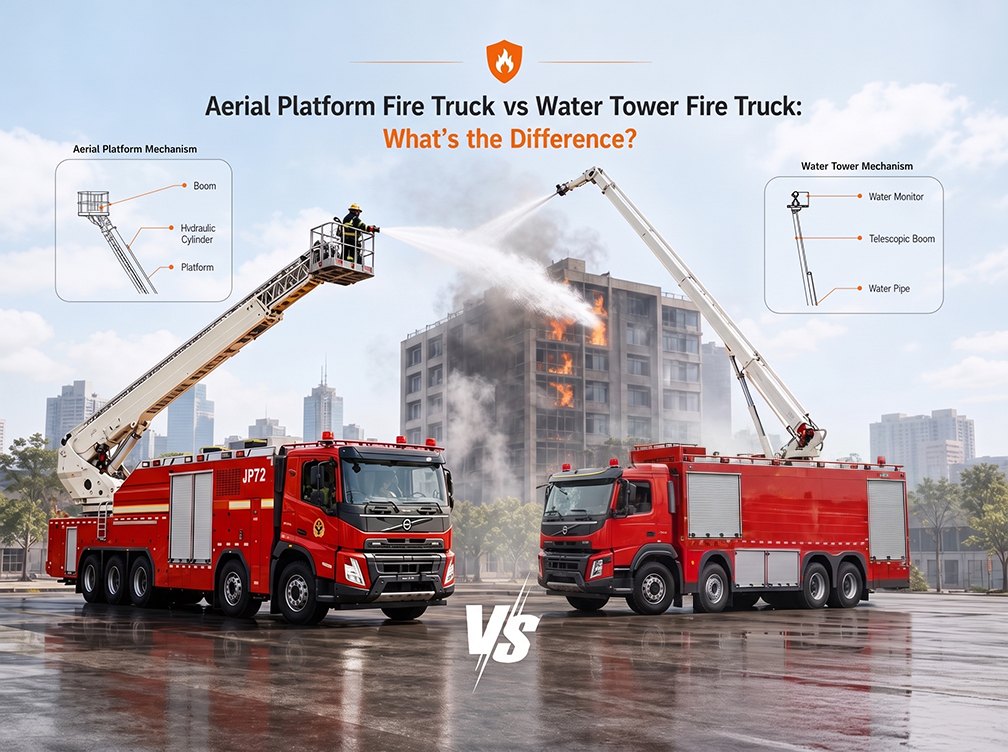
Cuando se trata de combatir incendios en edificios de gran altura, instalaciones industriales o grandes almacenes, los camiones de bomberos aéreos son indispensables. Pero entre los diversos tipos de equipos aéreos, dos suelen causar confusión: la plataforma aérea de camión de bomberos y la torre de agua de camión de bomberos. Aunque pueden parecer similares a primera vista—ambos cuentan con brazos hidráulicos y están diseñados para la extinción de incendios en altura—cumplen misiones fundamentalmente diferentes. Este artículo desglosa las diferencias clave entre estos dos tipos de vehículos, ayudando a los profesionales del servicio de bomberos, gerentes de compras y distribuidores de equipos a tomar decisiones informadas según las necesidades operativas. I. ¿Qué son los camiones con plataforma aérea? Según la norma nacional china GB 7956.12-2015, ambos vehículos pertenecen a la categoría de vehículos aéreos de lucha contra incendios—vehículos equipados con brazos elevadores, plataformas giratorias y equipos contra incendios para operaciones a gran altura. Sin embargo, sus definiciones específicas destacan una diferencia crítica. Camión de bomberos con plataforma aérea Un camión de bomberos con plataforma aérea está equipado con un brazo combinado plegable o plegable-telescópico, una plataforma para personal, una plataforma giratoria y dispositivos contra incendios. La característica definitoria es la plataforma de trabajo (cesta) al final del brazo, donde los bomberos pueden situarse para realizar operaciones de rescate y extinción de incendios. Características principales:• Equipado con una plataforma que puede transportar de 750 lb a más de 1.500 lb de personal y equipos• Diseñado tanto para rescate y extinción de incendios—los bomberos pueden operar directamente desde la plataforma• La plataforma puede utilizarse con dispositivos de control de descenso, cabrestantes hidráulicos o toboganes de rescate• Mayor alcance horizontal y mayor amplitud de trabajo en comparación con las torres de agua II. ¿Qué son los camiones de bomberos con torre de agua? Un camión de bomberos con torre de agua está equipado con un brazo combinado plegable o plegable-telescópico, una plataforma giratoria y dispositivos contra incendios—sin una plataforma para personal. En su lugar, se instala un monitor contra incendios (cañón de agua) en la punta del brazo, que puede controlarse de forma remota desde el suelo. Características principales:• Sin plataforma para personal—los bomberos operan desde el suelo mediante control remoto• Enfocado exclusivamente en la supresión de incendios en altura, no en rescate• Proporciona un flujo de agua excepcionalmente alto—superando los 2.000 galones por minutoen muchos modelos industriales• Diseñado para la protección contra incendios industriales donde no se requiere capacidad de rescate III. Comparación lado a lado Característica Camión de bomberos con plataforma aérea Camión de bomberos con torre de agua Función principal ...
Detalles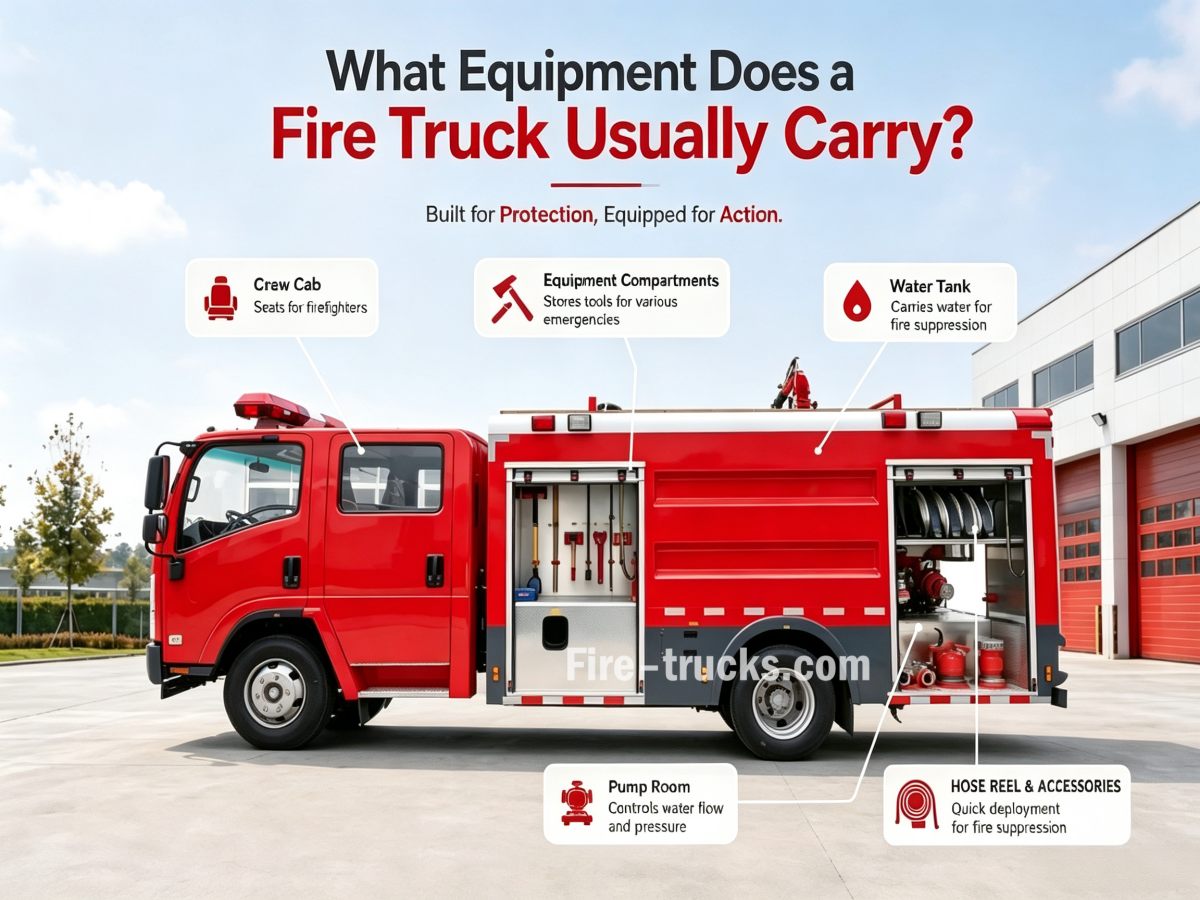
Un camión de bomberos normalmente transporta equipos de extinción de incendios, suministro de agua, rescate y protección de seguridad. Los equipos comunes incluyen bombas contra incendios, tanques de agua, mangueras contra incendios, boquillas contra incendios, monitores contra incendios, válvulas, escaleras contra incendios, herramientas de rescate, equipos de protección y dispositivos de comunicación. Este artículo desglosa sistemáticamente la clasificación, las funciones y las consideraciones de selección de los equipos estándar de camión de bomberos equipo, ayudando a los profesionales de compras y a los usuarios finales a comprender completamente las configuraciones de los vehículos contra incendios. I. Clasificación de los equipos de los camiones de bomberos 1. Equipos de extinción de incendios— Herramientas principales para la supresión directa de incendios, incluidas boquillas contra incendios, monitores contra incendios, mangueras contra incendios, divisores de agua y adaptadores. 2. Equipos de rescate y apertura de accesos— Herramientas para crear rutas de acceso para operaciones de rescate y extinción de incendios, incluidas herramientas hidráulicas de rescate, hachas contra incendios, barras de palanca, palancas, sierras de corte y motosierras. 3. Equipos de rescate y salvamento de vidas— Equipos para la búsqueda, traslado y protección del personal, incluidos camillas, cuerdas de rescate, ganchos de seguridad, dispositivos de control de descenso, equipos de respiración autónoma (SCBA) y cilindros de aire de repuesto. 4. Equipos de extracción de humo e iluminación— Equipos para mejorar las condiciones en el lugar del incendio, incluidos extractores de humo, torres de iluminación móviles y reflectores portátiles de alta intensidad para búsqueda. 5. Equipos de protección personal (EPP)— Equipamiento para proteger la seguridad de los bomberos, incluidos cascos, ropa de protección estructural contra incendios, guantes, botas y cinturones de seguridad. 6. Equipos de comunicación y reconocimiento— Equipos para la recopilación de información en el lugar del incendio y la coordinación del mando, incluidos radios bidireccionales, cámaras termográficas y detectores de gases tóxicos. II. Equipos de extinción de incendios en camiones de bomberos 1. Bomba contra incendios La bomba contra incendios es la fuente de energía para todas las operaciones de extinción de incendios. Presuriza mecánicamente el agua, proporcionándole suficiente energía cinética para completar todo el proceso de "aspiración → presurización → suministro → descarga". Especificaciones habituales de las bombas contra incendios: • Bomba contra incendios de presión estándar (tipo CB10/30): Caudal ≥30L/s, presión nominal 1.0MPa, instalación trasera. Adecuada para camiones cisterna de agua estándar y camiones de espuma contra incendios, cumpliendo la mayoría de los requisitos urbanos e industriales de suministro de agua para extinción de incendios. • Bomba contra incendios de media/al...
Detalles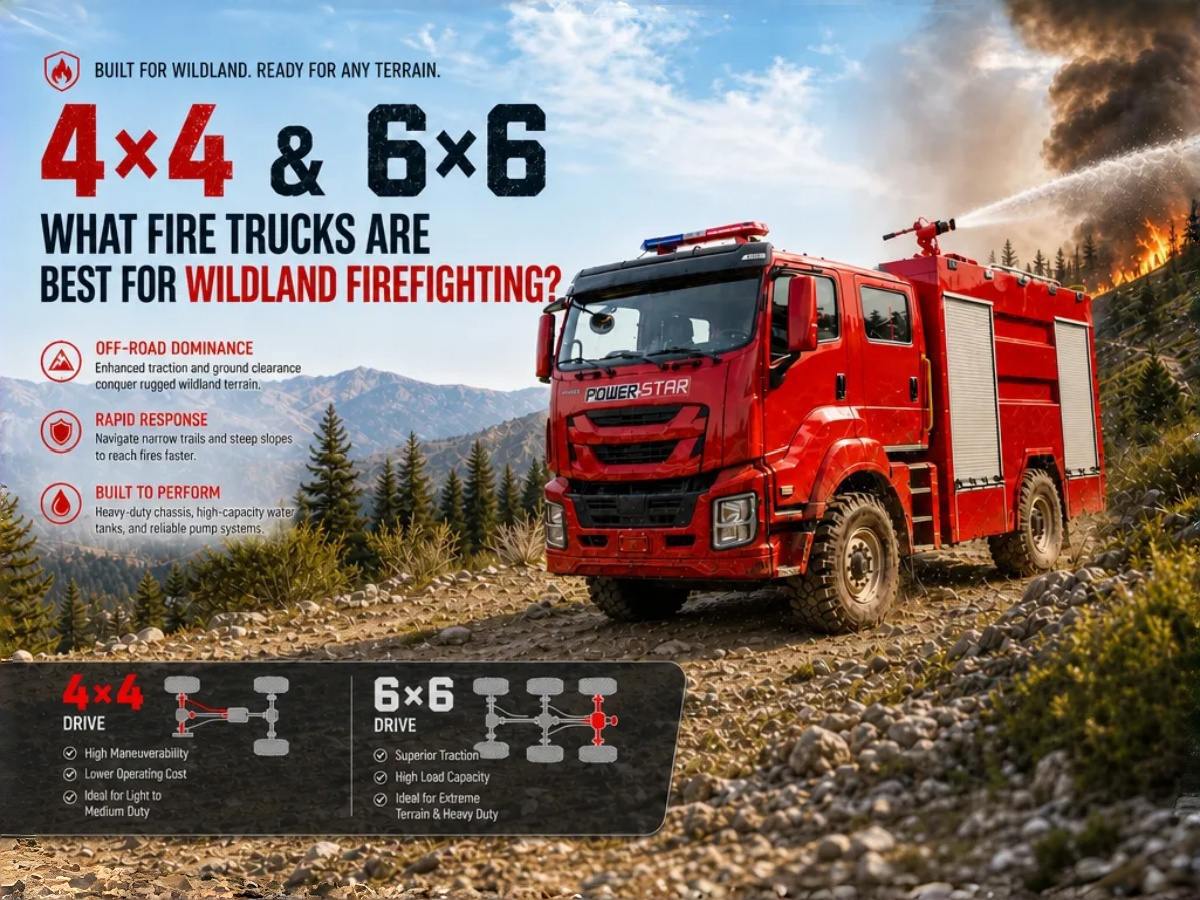
La lucha contra incendios forestales presenta desafíos que son fundamentalmente diferentes de los de la lucha contra incendios estructurales. En bosques remotos, pastizales y terrenos montañosos, los camiones de bomberos deben desplazarse por senderos estrechos, subir pendientes pronunciadas y operar lejos de hidrantes o fuentes de agua. Elegir el camión delucha contra incendiosadecuado es una decisión estratégica que afecta directamente el tiempo de respuesta, la seguridad de la tripulación y la eficacia de la extinción del incendio. Este artículo ofrece un análisis completo de los tipos de camiones de bomberos más adecuados para la lucha contra incendios forestales, sus características principales y métodos de selección, ayudándole a tomar la decisión correcta según sus requisitos operativos específicos. Respuesta rápida Los incendios forestales se caracterizan por grandes áreas afectadas por el fuego, terrenos complejos, fuentes de agua limitadas y malas condiciones de las carreteras, por lo que no existe un único camión de bomberos que pueda manejar todos los escenarios de incendios forestales. En términos generales, la lucha contra incendios forestales utiliza principalmente los siguientes tipos de camiones de bomberos: • Camiones ligeros para incendios forestales: para acceso por caminos forestales y respuesta rápida• Camiones todoterreno 4×4 para incendios forestales: para terrenos montañosos y con colinas• Camiones 6×6 para incendios forestales: para incendios forestales a gran escala y operaciones prolongadas• Camiones cisterna de agua: para suministro continuo de agua y apoyo• Camiones de espuma contra incendios: para instalaciones petroleras, equipos forestales o incendios especiales• Vehículos de rescate: para comunicación, iluminación, apertura de accesos y apoyo logístico I. ¿Por qué los incendios forestales requieren camiones de bomberos especializados? Los incendios forestales se diferencian fundamentalmente de los incendios estructurales en varios aspectos críticos: Características clave de los incendios forestales:• Grandes áreas afectadas por el fuego que cubren hectáreas de terreno• Direcciones del viento que cambian rápidamente• Terrenos complejos y accidentados• Acceso limitado o inexistente a hidrantes o fuentes de agua• Caminos forestales estrechos y sin pavimentar• Condiciones difíciles de comunicación Los camiones de bomberos urbanos estándar generalmente no son adecuados para la lucha contra incendios forestales por las siguientes razones: •Carecen de tracción 4×4 o tracción en todas las ruedas para caminos de montaña sin pavimentar y pendientes pronunciadas;•El mayor tamaño y la baja altura libre al suelo hacen que sean propensos a quedar atascados en senderos forestales estrechos y terrenos blandos;•Las bombas urbanas priorizan un alto caudal a presión moderada, mientras que las operaciones forestales requieren alta presión en tendidos largos de manguera con agua limitada, un enfoque fundamentalmente diferente. II. Ti...
Detalles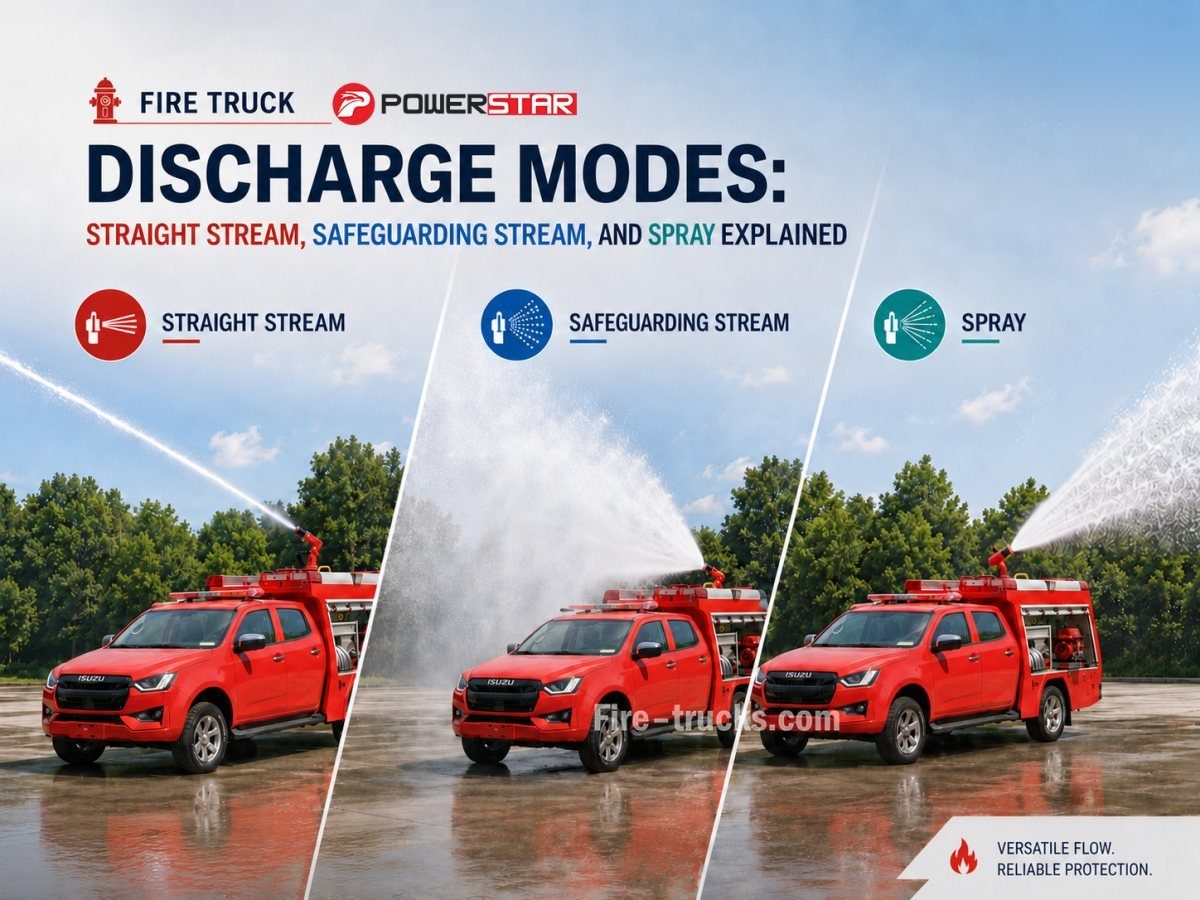
En las operaciones de extinción de incendios, la selección del modo de descarga determina directamente la eficiencia de extinción, la seguridad operativa y la eficacia del control del incendio. La mayoría de las personas no saben quecamión de bomberoslas boquillas pueden cambiar entre tres modos principales de descarga: chorro directo, chorro de pulverización y chorro de protección. Los diferentes modos varían significativamente en el patrón de flujo, alcance, fuerza de impacto y área de cobertura, y cada uno corresponde a escenarios de incendio completamente diferentes. Este artículo, basado en los estándares profesionales de operación contra incendios, analiza exhaustivamente los principios, las características clave y los escenarios aplicables de los tres modos de descarga, ayudando a nuestros clientes a dominar sistemáticamente las técnicas de descarga de los camiones de bomberos. I. ¿Por qué los camiones de bomberos necesitan diferentes modos de descarga? El chorro directo, el chorro de pulverización y el chorro de protección corresponden a tres mecanismos diferentes de extinción: extinción por impacto, asfixia por vaporización y protección contra la radiación térmica. Los bomberos deben cambiar de forma flexible según las condiciones del lugar. Entonces, ¿por qué no podemos seguir usando solo un tipo de chorro? 1. La diversidad de tipos de incendio requiere diferentes formas de medios extintores Los diferentes tipos de incendio tienen distintas características de combustión, lo que determina el método de extinción adecuado: • Los incendios de materiales sólidos de Clase A requieren el impacto de un chorro directo para romper los materiales en combustión y penetrar para lograr enfriamiento interno; • Los incendios de líquidos de Clase B no pueden usar el impacto de un chorro directo (ya que provoca salpicaduras y propaga el incendio), sino que deben usar un chorro de protección o de pulverización para cubrir y diluir; • Los incendios eléctricos energizados de Clase E solo pueden usar chorro de pulverización, ya que las gotas finas de agua no forman una trayectoria conductora continua; • Los incendios en espacios cerrados requieren un chorro de pulverización para llenar todo el espacio, logrando la extinción mediante la absorción de calor por vaporización y la asfixia. Ningún modo individual puede adaptarse a todos los tipos de incendio. 2. Las diferentes etapas del mismo incendio requieren diferentes enfoques tácticos Incluso para el mismo incendio, las diferentes etapas requieren distintos modos de descarga: • En la etapa inicial, cuando el incendio es intenso, se necesita un chorro directo para impactar a larga distancia el punto de incendio y lograr una supresión rápida; • Durante el avance, se necesita un chorro de protección para formar una barrera de cortina de agua que bloquee la radiación térmica y proteja al personal; • Antes de entrar en una habitación, se necesita un chorro de pulverización para enfriar y diluir el humo y los gase...
Detalles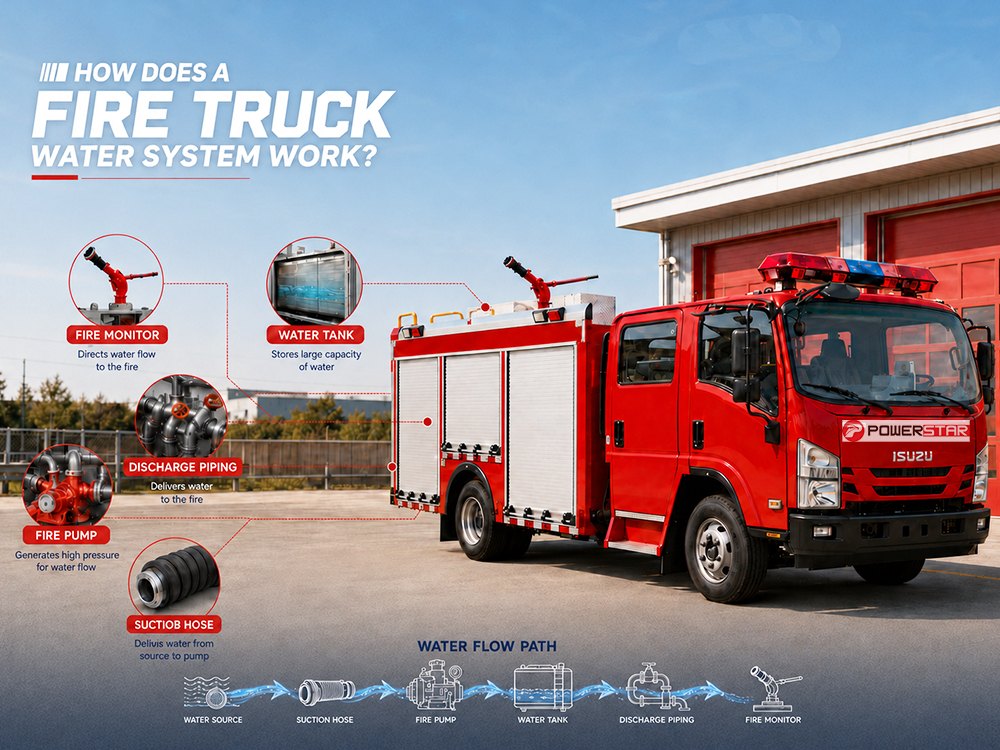
El sistema de tuberías de agua del camión de bomberos es el núcleo de cada operación de extinción de incendios. Dirige con precisión el agua desde el tanque o una fuente externa a través de la bomba, las válvulas y las tuberías para suministrar agua o espuma a alta presión al lugar del incendio, ya sea un incendio en un edificio de gran altura en un centro urbano densamente poblado o un incendio en un tanque de almacenamiento petroquímico en una zona industrial. El camión de bomberos sistema de tuberías de agua consta de múltiples componentes que trabajan juntos: bomba contra incendios, tanque de agua, manguera de succión, tuberías de descarga, válvulas, derivación divisora, derivación colectora, colador, monitor contra incendios, acoplamientos de manguera y más. La ruta completa del flujo es:Tanque de agua → Manguera de succión → Colador → Bomba contra incendios → Sistema de regulación de presión → Colector de descarga → Válvulas → Derivación divisora → Monitor contra incendios / Acoplamientos de manguera → Boquilla Este artículo explica cada componente del sistema de tuberías de agua y cómo trabajan juntos para suministrar agua con la presión y el caudal adecuados. I. Componentes principales del sistema de tuberías de agua Tanque de agua Almacena el suministro de agua a bordo. ● Capacidad:Normalmente 2.000–12.000 litros. ● Suministro:Alimenta la bomba mediante tuberías de entrada. ● Características:Mamparos antioleaje para la estabilidad del vehículo, colador para filtrar residuos y sistema de cebado para extraer agua de fuentes naturales. Bomba contra incendios Una bomba centrífuga accionada por el motor del camión mediante toma de fuerza (PTO); de una o varias etapas, de hierro fundido o bronce. ●Clases de presión: Disponible en valores nominales estándar de 0,8 MPa, 1,0 MPa, 1,2 MPa y 1,4 MPa, adaptados a los requisitos habituales de extinción de incendios. ●Caudales: Van de 1.200 a 6.000 L/min, con curvas de rendimiento optimizadas tanto para operaciones de alta presión como de gran volumen. Válvulas y tuberías Una red de tuberías y válvulas que controla la dirección y el volumen del flujo de agua. ●Válvula de entrada: Conecta la bomba con fuentes externas de agua (hidrante o punto de aspiración). ● Válvula del tanque a la bomba: Permite que la bomba extraiga agua directamente del tanque incorporado. ● Válvulas de descarga: Controlan el flujo de agua hacia las mangueras y boquillas. II. Cómo funciona el sistema de tuberías de agua del camión de bomberos Paso 1: Entrada de agua y cebado El agua entra en el sistema desde el tanque incorporado, un hidrante contra incendios o fuentes naturales de agua (lagos, ríos, estanques). Cuando se extrae agua de fuentes naturales, el sistema de cebado (bomba de vacío) elimina el aire de la manguera de succión, creando un vacío que permite que la presión atmosférica empuje el agua hacia la bomba. Un colador filtra los residuos para proteger la bomba y una válvula de retención evita el flujo inverso. Paso ...
Detalles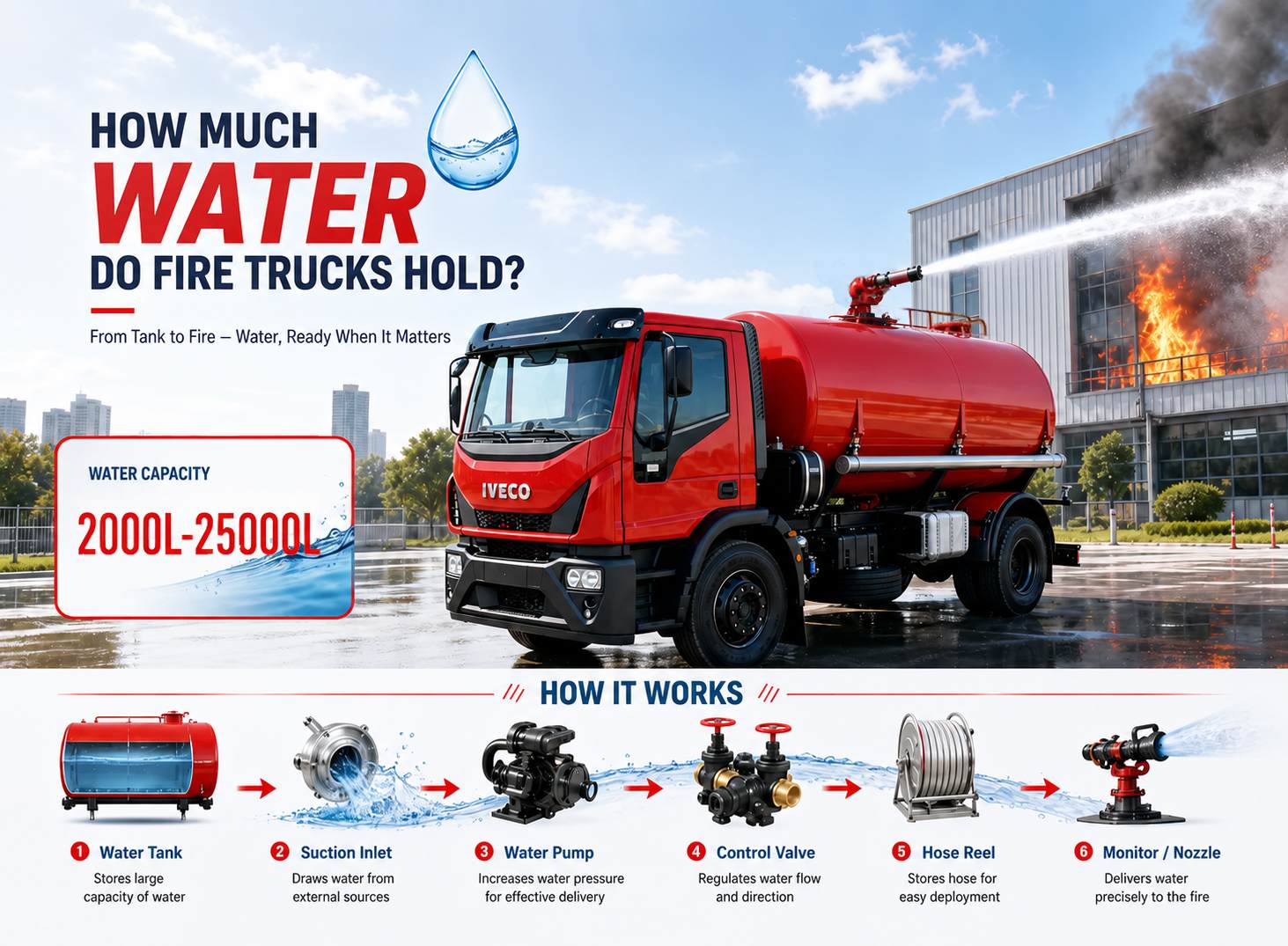
¿Cuánta agua puede transportar un camión de bomberos? Esta es una de las primeras preguntas que enfrentan nuestros clientes al seleccionar un camión de bomberos. No existe un número único y fijo: depende del tipo de vehículo, la capacidad del chasis, el propósito del diseño y las regulaciones regionales, con capacidades que van desde unidades ligeras de 2.000 litros hasta camiones de bomberos industriales de 25.000 litros. Pero un tanque más grande no siempre significa un mejor rendimiento;vehículo contra incendios la capacidad del tanque de agua debe combinarse adecuadamente con el caudal de la bomba, la tasa de descarga del monitor y la capacidad del chasis para lograr resultados efectivos en la extinción de incendios. Este artículo comienza con los fundamentos de la capacidad del tanque de agua de los camiones de bomberos, analiza los rangos típicos de almacenamiento para diferentes tipos de vehículos, examina los factores clave que influyen en el diseño del tanque y proporciona orientación práctica para la compra. Puntos clave: La capacidad del tanque de agua de un camión de bomberos suele oscilar entre 2.000 y 25.000 litros Los diferentes tipos de camiones de bomberos tienen distintas capacidades de tanque Un tanque más grande no significa una mejor capacidad de extinción de incendios La capacidad del tanque debe combinarse con el caudal de la bomba, el caudal del monitor y la capacidad del chasis La extinción de incendios industriales normalmente requiere tanques grandes, mientras que la extinción municipal prioriza la maniobrabilidad » I. Tres tipos básicos de tanques de agua para camiones de bomberos Camiones de bombeo:Estos son los camiones de bomberos municipales más comunes. Dependen principalmente de los hidrantes contra incendios para el suministro de agua y transportan aproximadamente 1.900–3.800 litros de agua a bordo para el ataque inicial. El componente principal de estos vehículos es la bomba, no el tanque; están diseñados para suministrar agua a presión una vez conectados a un hidrante. Camiones cisterna (transportadores de agua):Estos vehículos están dedicados a transportar grandes volúmenes de agua, con capacidades de tanque que normalmente superan los 11.400 litros. Desempeñan un papel fundamental en zonas rurales y remotas donde no hay hidrantes contra incendios disponibles, transportando agua desde las fuentes de suministro hasta la escena del incendio para que los camiones de bombeo puedan utilizarla. Camiones de bombeo-cisterna:Estos vehículos combinan las funciones de bombeo y transporte de agua en una sola unidad. Pueden descargar agua para la extinción de incendios y también suministrarla a otros vehículos. Las capacidades de tanque suelen oscilar entre 5.700 y 11.400 litros, lo que los convierte en una solución versátil para los departamentos de bomberos. » II. ¿Cuánta agua pueden transportar los diferentes tipos de camiones de bomberos? Tipo de camión de bomberos Capacidad típica del tanque Aplicación principal Cami...
Detalles
Por favor, siga leyendo, manténgase informado, suscríbase, y le invitamos a que nos diga qué piensa.

 Network IPv6 compatible con

 español
 English
 français
 Deutsch
 русский
 italiano
 português
 Nederlands
 العربية
 日本語
日本語 한국의
한국의 Türkçe
 Melayu
 ไทย
ไทย Tiếng Việt
 Indonesia
  中文
中文 қазақ
қазақ Filipino
 မြန်မာ
 српски